
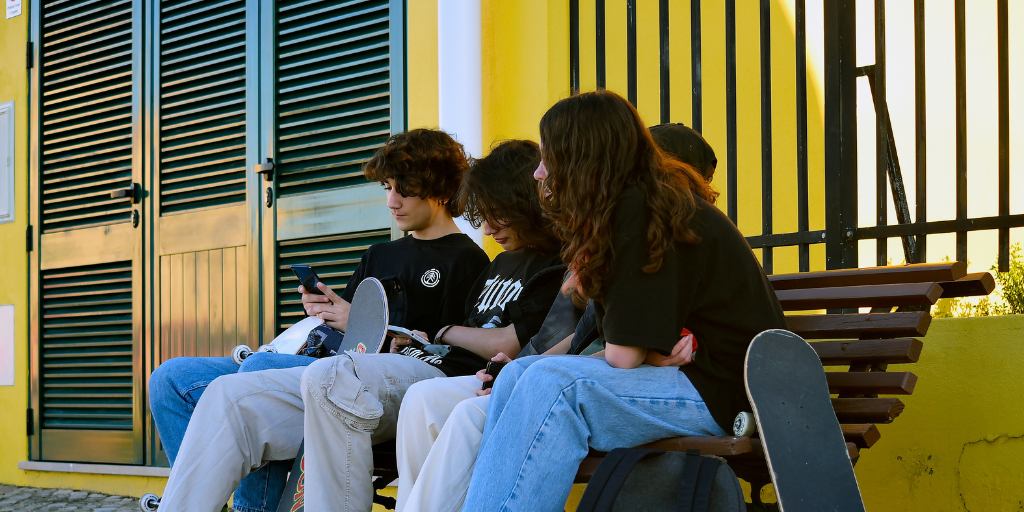
You’ve probably heard of burner phones, but what is a burner account? Many teens are turning to these secret social media profiles to hide their online activity. The practice isn’t always done for nefarious reasons; nevertheless, it can expose kids to serious risks.
Burner accounts are secret, anonymous social media profiles designed to hide a person’s true identity.
Often, they’re secondary accounts used in conjunction with a person’s main profile. Burner accounts might be fully anonymous, or a user might let a select group of friends in on their identity. They’re frequently used by celebrities, teens, and anyone who wants to fly under the radar online.
Burner accounts and finstas are essentially the same. “Burner” is generic and covers all social media, whereas “finstas” are specific to Instagram.
Burner can also mean temporary, whereas finsta accounts tend to live on, but these terms are often used interchangeably.
There are a number of reasons why your teen might have a secret account. Not all of them are concerning. Here are some reasons teens use burner accounts:
The desire for privacy is a normal part of adolescence. Some kids use burner accounts to conceal their online activity from their parents, not because they’re doing anything wrong, but because they’re, well, teenagers.
If you’ve set up parental controls on Instagram, Snapchat, or other social media, your child might use a burner account to get around those restrictions.
Social media puts modern kids under a microscope in a way previous generations never experienced. Some kids create burner accounts and keep them private so they can be online without constant social pressure.
If your child has a burner account, it could be nothing more than a silly experiment or a fun alter ego.
Here’s where it gets dicey. Some kids use burner accounts because they’re engaging in activities they don’t want their parents to discover. It could be something dangerous, like drug use or provocative behavior, or something that isn’t dangerous, but that their parents would disapprove of.
Keeping secrets from parents is a developmentally normal part of being a teenager. It's part of forming their own identity and searching for independence. But secret-keeping in the form of a burner account brings particular risks.
Did you know? Thousands of parents trust BrightCanary to monitor every app their kids use — even the apps parents don’t know about. Start your free trial of the best child monitoring app for iOS.
If you discover your child has a burner account (or just suspect it), here are five steps you can take to protect them:
Step one is to talk to them about it. Without blame, ask them why they’re using a burner account. This is new territory for you both, and mutual respect will help you work together toward a solution.
When you talk to your child about their burner account, you may discover they’re using it to hide unsafe or illegal behavior. If that’s the case, addressing these concerns needs to be your top priority.
Remind them that nothing is truly private online, and explain that they’re putting themselves at risk by using an account without any teen protections or parental controls.
Depending on what you discover in your conversation, you may choose to let your child keep their burner account, or you might decide it’s a hard no. Whatever the case, be clear about what you expect from them moving forward.
BrightCanary can’t directly detect that your child has a burner account, but by monitoring everything they type on their device across all apps and websites, it will spot anything concerning, even on secret accounts.
You’ll get insights through your parent dashboard and real-time alerts to any red flags. There’s a reason BrightCanary was included in the APA Labs Digital Badge Solution Library, which recognizes solutions committed to clinical evidence, ethical standards, data privacy, and child safety.
A burner account is a secret, anonymous social media profile used to hide a person's true identity. Teens often use them as secondary accounts alongside their main profiles — sometimes keeping them fully anonymous, sometimes sharing their identity with a small circle of friends. The term covers all social media platforms; the Instagram-specific version is called a finsta.
Finsta is a combination of "fake" and "Instagram." It refers to a secondary, often private Instagram account that a teen uses separately from their main profile. Finstas typically have a smaller, more trusted audience and are used to share content the teen wouldn't want on their main account. While the term is Instagram-specific, the concept is essentially the same as a burner account on any other platform.
Teens create burner accounts for a range of reasons — not all of them concerning. Some want privacy from parents as a normal part of adolescent development. Some use them to escape social pressure from their main account. Others use them specifically to bypass parental controls or to hide behavior they know their parents would disapprove of, which is where the real risk lies.
There's no guaranteed way to detect a burner account directly. Signs to watch for include being secretive about their phone, logging out of apps quickly when you're nearby, having multiple email addresses, or referencing online activity that doesn't match their known accounts. BrightCanary monitors everything your child types across all apps — so even if you don't know a burner account exists, concerning activity on it will still surface.
Standard parental controls — including Apple Screen Time and Instagram's Teen Accounts — cannot detect or restrict a burner account your child has set up without your knowledge, because those controls are tied to accounts you're aware of. This is one of the biggest risks of burner accounts: they exist entirely outside whatever protections you've put in place.
Not necessarily — it depends on what you find. If the account is being used to hide dangerous or inappropriate behavior, addressing that behavior is the priority, and deleting the account may be appropriate. If your child is using it for harmless privacy or to escape social pressure, a conversation about the risks and a clear set of expectations may be more productive than an outright ban, which is likely to result in a new secret account you don't know about.
Having a burner account isn't illegal, but it may violate a platform's terms of service — most platforms require users to use their real identity and prohibit multiple accounts under certain conditions. More importantly, the lack of protections on a burner account can expose a teen to illegal content or contact that wouldn't reach them on a properly configured teen account.
Burner accounts are secret social media profiles that expose kids to serious risks, like contact from strangers and inappropriate content, because they lack the safeguards of teen-specific accounts. If you suspect your child has one, ask their reasons, discuss the risks, and use a monitoring app.
BrightCanary helps you monitor your child’s activity on the apps they use the most, even on burner accounts. Download today to get started for free.