
Welcome to Parent Pixels, a parenting newsletter filled with practical advice, news, and resources to support you and your kids in the digital age. This week:
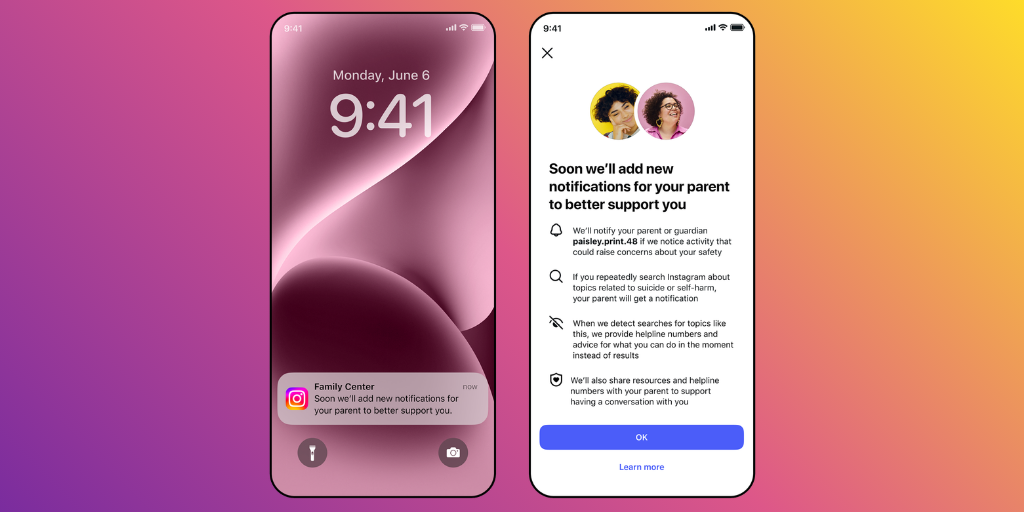
📱Good news from Instagram (yes, really): Instagram is rolling out a new feature that alerts parents when their teen searches for suicide or self-harm content — including phrases that suggest a teen may be at risk. The alerts will go to parents enrolled in Instagram's parental supervision tools. Instagram says they set the threshold to require multiple searches within a short window, while still erring on the side of caution. While that means some alerts may not reflect a real crisis, this is a meaningful step overall. If your teen is on Instagram, now is a good time to make sure you're enrolled in parental supervision so these alerts actually reach you.
⚠️Bad news from Instagram (there it is): According to court documents from the ongoing federal lawsuit in California, Meta's own internal survey found nearly 1 in 5 teens aged 13 to 15 reported seeing unwanted nudity or sexual images on Instagram. The same survey found about 8% of that age group had seen someone harm themselves or threaten to do so on the platform.
These are Meta's own numbers. It's a useful gut-check as Instagram rolls out new safety features: progress is real, and so is the distance still to go.
🚫 Should we ban teenagers from social media? Earlier this year, Australia rolled out its first-of-its-kind social media ban for kids under 16. Similar proposals are circulating in the US and UK. But some argue that we shouldn’t ban teens from social media because kids will always find their ways around them, enforcement is difficult, and waiting until a child turns 16 doesn't actually teach them how to navigate the internet safely. It just delays the moment they're dropped in.
Our take: Why not limit access and create better guardrails? Smarter regulation matters. Platforms don't need to give kids access to features engineered for compulsive use: endless scroll, autoplay, algorithmically turbocharged feeds. Age verification should be meaningful, not performative. And content moderation for minors needs real teeth. But regulation alone isn't a parenting strategy. The goal isn't to keep kids off the internet forever. It's to raise kids who can handle it. That requires ongoing conversations, not just app settings or age cutoffs. When you’re ready to start monitoring social media, start here.
Parent Pixels is a biweekly newsletter filled with practical advice, news, and resources to support you and your kids in the digital age. Want this newsletter delivered to your inbox a day early? Subscribe here.
Screen time tends to reach new heights as the school year hits its midpoint. Use these conversation starters to check in on how your teen is feeling about their digital habits … without it turning into a lecture:
😔 The deepfake crisis no one is talking about enough: New large-scale research from UNICEF, ECPAT, and INTERPOL found that at least 1.2 million children across 11 countries reported being victims of sexually explicit deepfakes in the past year.. This is an urgent and underreported crisis — and it's a reminder that online safety isn't just about screen time.
📊How much is your teen on their phone at school? More than an hour, on average — and most of that time is social media. A recent analysis of American teens found that adolescents aged 13 to 18 spend more than 8.5 hours daily on screen-based entertainment overall, with over an hour of phone use happening during the school day itself.
🤖 Teens still love TikTok: New Pew Research data puts some numbers to teen platform habits: 68% of teens ages 13–17 use TikTok, with roughly 1 in 5 saying they're on it almost constantly. About 1 in 5 teens also report nearly constant YouTube use, and 64% of teens use AI chatbots (about 3 in 10 do so daily).