Welcome to Parent Pixels, a parenting newsletter filled with practical advice, news, and resources to support you and your kids in the digital age. This week:
🏛️ California Gov. Newsom signed extensive social media restrictions into law: The Golden State made history last week when Gov. Newsom signed a package of 13 digital safety bills into law. It’s the most comprehensive set of online child safety protections any US state has passed. Some highlights:
The bills come at a time when social media and AI companies are facing greater pressure to protect their youngest and most vulnerable users. California’s new laws, which go into effect in 2027, are the strictest in the nation — and may set a new standard for these companies in the US. OpenAI actually gave its last-minute support for SB 1119, but we’ll see if any companies appeal the new safeguards and delay implementation.
🇪🇺 The EU is moving toward a social media ban: European Commission President Ursula von der Leyen announced that the European Union is developing bloc-wide rules to restrict social media access for children. The proposal is no social media under 13, and no personal accounts under age 15. Children aged 13 and 14 could have “mini accounts” with parental supervision, limited features, and strict one-hour daily time limits.
The proposed Kids Act would also reverse the burden of proof by requiring platforms to prove they are safe for minors, rather than requiring families to prove harm. It still needs approval from individual EU member states, so it could take years to become law, but the direction is clear.
“I am aware that many perceive the power of big tech as overwhelming and impossible to roll back. I disagree,” Von der Leyen said. “Europe has the power to act. It is us who decide the rules, not Big Tech.”
Meanwhile, the UK (which isn’t part of the EU and passed a social media ban this year that takes effect in 2027), announced it will require Apple and Google to block explicit images on kids’ phones. The move follows earlier pressure on both companies to enable these protections by default. It’s a big message from Europe to big tech companies: it’s past time to set common-sense rules on kids’ phones and social media.
🇦🇺 Australia introduces algorithm opt-out for social media users: Australia was the first country to pass a social media ban for teens, and now, they’re coming for the algorithm. The Australian government announced new legislation that would give users the ability to opt out of algorithm-driven content entirely. Dubbed the “my feed, my way” plan, users who opt out would see content only from accounts they’ve actively chosen to follow and none of the recommendations and engagement-driven suggestions that have collectively turned our brains to algorithmic mush. Platforms would face fines of more than A$100m for non-compliance.
New laws will also require platforms to protect minors from specific harmful content categories including eating disorder promotion, misogynistic content, and content that glorifies dangerous behavior.
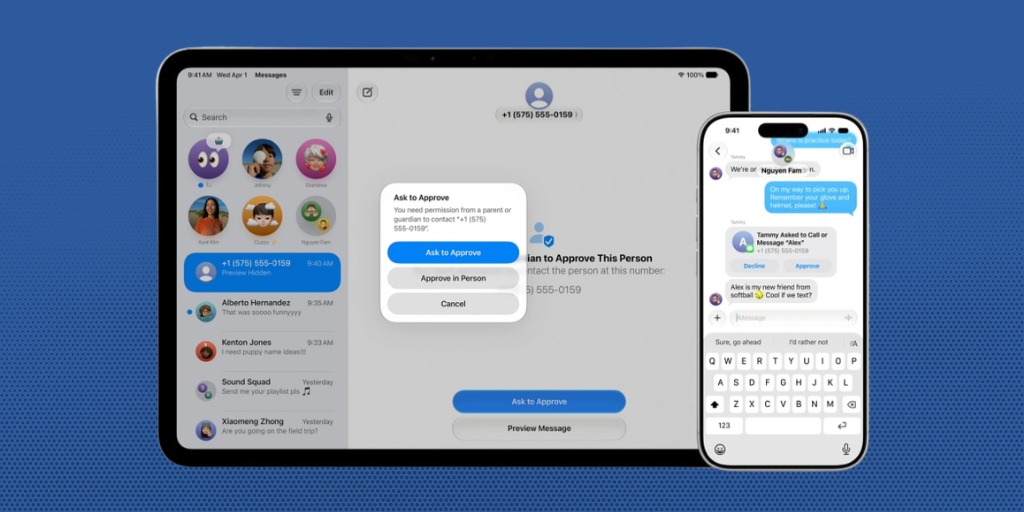
📱 Meet the new parental controls on Apple’s iOS 27: There are some new child safety features waiting for you on the latest iOS update. Here’s what to check out:
As always, these parental controls work best when they’re paired with BrightCanary, which shows you what your child is actually saying and searching (not just how long they spent on an app). Learn more about how BrightCanary works.
We’re several weeks into the school year, which means routines are settled, social dynamics are in full swing, and your child has probably been spending more time on their phone than you’d like. Now’s a good time to check in. Try these conversation starters:
📱 Wirecutter published a comprehensive tech guide walking parents through managing screens at every age, from early childhood through teen years. One thing we’d add to their list: BrightCanary monitoring for extra peace of mind.
💙 What do young people actually like about social media? Research from the UK government found that 82% of young people aged 10–21 say social media helps them feel more connected to others. Internet Matters shares the surprising benefits of social media (and why this topic is always more nuanced than we’d think).
🎗️ September is National Suicide Prevention Awareness Month. Learn more about what to do if your child receives a message promoting self-harm, and read about the latest data on how social media can impact teen mental health.
If your child experiences a mental health crisis, here are some resources for immediate support: