

A recent study by Canadian researchers tested whether using less social media could make teens and young adults feel better about their bodies.
About 22% of children and adolescents struggle with disordered eating, which can lead to serious mental and physical issues. One of the predictors of developing an eating disorder is poor self-esteem and low body image.
But can cutting back on social media improve kids’ self-esteem? Here’s what the study found.
In 2021, researchers recruited 220 participants for a randomized controlled trial. The participants were 17-to-24-year-old undergraduate Canadians (76% female, 23% male) struggling with depression or anxiety. Half of them were told to use social media for just one hour a day for three weeks. If they used it for more than an hour, they got a reminder email. The other half were allowed to use social media as much as they wanted.
The participants submitted screenshots of their smartphones’ daily screen time reports. Social media platforms tracked in this study included Facebook, Instagram, TikTok, Snapchat, Twitter, Pinterest, and Tumblr. Not included were video streaming services — like YouTube or Netflix — or messaging platforms like WhatsApp or Facebook Messenger.
Participants were asked questions about their weight and body image before and after the three-week period.
While not everyone stuck to the one-hour limit, on average, the people in the restricted group cut their social media time by half. They used social media for only 78 minutes per day, while participants in the unrestricted group used social media for 188 minutes per day.
After three weeks of using less social media, young people of both genders felt better about their bodies and reported higher levels of self-esteem and body image. There was no change to these metrics in the unrestricted group.
Most studies measuring the impact of social media are only correlational — i.e. they tell us if there’s an association between social media use and negative effects, but they don’t tell us if social media causes the negative effects.
Because of the way this study was conducted, it shows social media use has a direct negative impact on body image. And, most importantly, it shows us that using less social media can actually help improve body image and self-esteem.
It only lasted three weeks, so we don't know if these improvements would last longer. The study only tracked social media use on phones, not other devices. And it only looked at people who were feeling anxious or depressed, so we don't know if the results would be the same for everyone.
This study suggests that parents should encourage teenagers to limit their social media use to about an hour a day in order to support a healthy body image and self-esteem. In addition, videos featuring disordered eating are rampant on platforms like YouTube, TikTok, and Instagram; educate yourself about this type of content and discuss the topic with your kids.
A growing body of experts recommend monitoring your child's online activity, so you can talk to them about concerning content as soon as it crops up. BrightCanary gives you visibility into your child's online activity, including sent messages, Google and YouTube searches, and texts. To help your kids develop healthy digital habits, it's important to have open conversations with them about the potential impact of social media use on mental health.
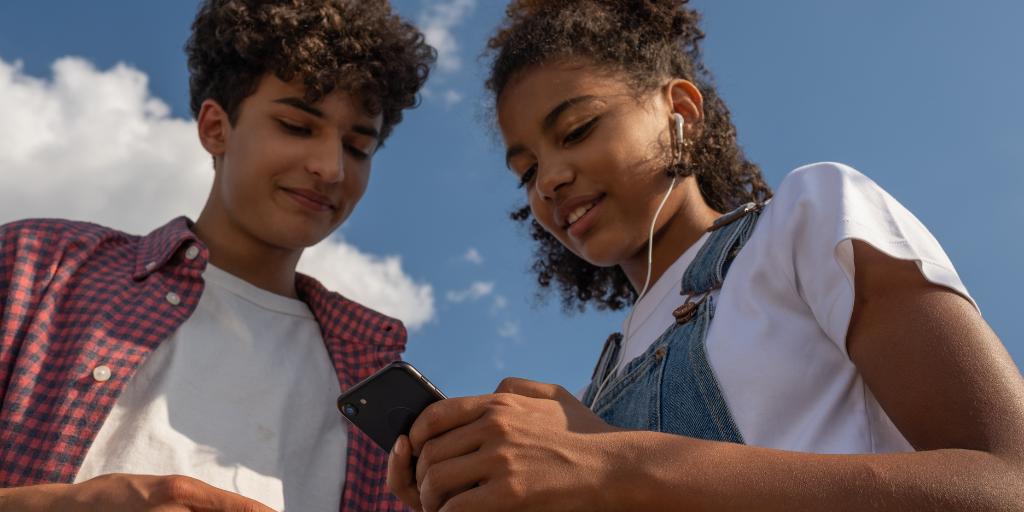
Summer's here, and with school out, screen time for kids tends to shoot up. But it's not all bad news. This downtime provides a prime opportunity to help teens learn to manage their own technology use — an essential skill in today's digital age.
Thankfully, there are apps designed to help with this by fostering healthy digital habits that guide our teens towards more mindful tech use. Teens often mirror what they see, so adopting one of these apps for yourself could model healthy behaviors. Openly discuss your own challenges with tech distractions and overuse; it’ll show your teen that they're not alone in navigating this digital landscape. After all, learning to manage screen time isn't just a teen issue — it's a lifelong skill we all need.
Here are four of the best for you to consider.
ScreenZen is an app designed to help teens gain control over their digital habits. It monitors screen time, but it also offers more active interventions to help users make meaningful changes. The app provides a comprehensive analysis of digital habits, breaking down app usage and identifying patterns that could lead to excessive screen time.
To start, you can set a limited number of phone “pick-ups” per day. You can also implement up to a 30-second delay before an app opens, giving you time to reconsider if you really need to check your Instagram again.
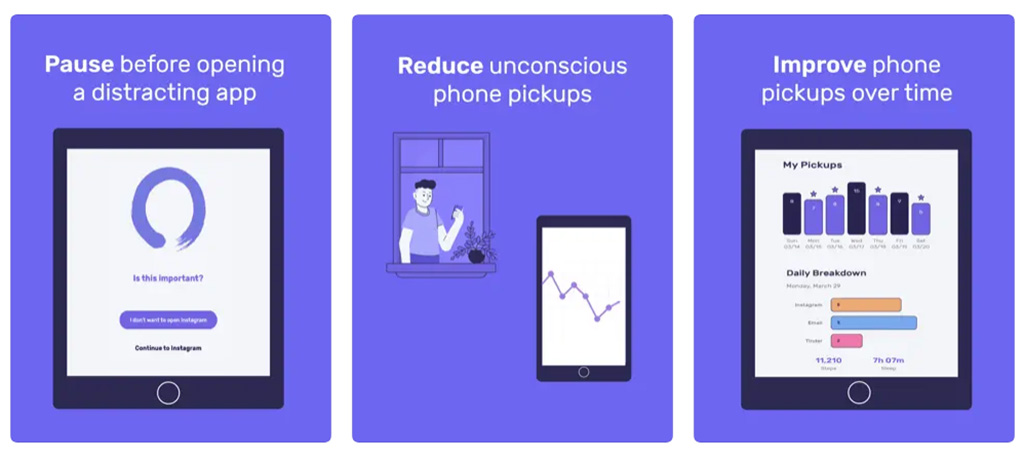
According to some users on the App Store, there can be a bit of a learning curve on how to block specific websites. But if your teen’s goal is primarily to use this app to cut down on the amount of time they’re spending on your phone, this complaint is less relevant.
ScreenZen is free, making it a great way for your teen to test out the concept of limiting their screen time without any upfront cost.
Sample user review:
"As a teen I’m realizing how addictive an app can be and how I can just subconsciously tap on an app and never leave. I was looking for a self blocker to break this annoying system of going to bed too late then waking up late. Ofc there were so many apps out there trying to go for the same purpose but this app really helped me out. I also love that you can have a choice to reopen the app when it sends the 'are you sure you want to continue' memo. Can everyone give them a round of applause for the simple and practical use of this. they don’t shove advertisement in your face! There’s very few apps who don’t send spontaneously ads."
Cost: Free
Best for: Teens who want to test the idea of monitoring their screen time, but don’t aren’t interested in blocking apps and websites
AntiSocial is about comparison and competition. The app collects anonymized data and allows users to compare their phone usage with other users worldwide. This can create a sense of competition for teens, encouraging teens to reduce their screen time. You can also set daily limits and block times accordingly in the app.
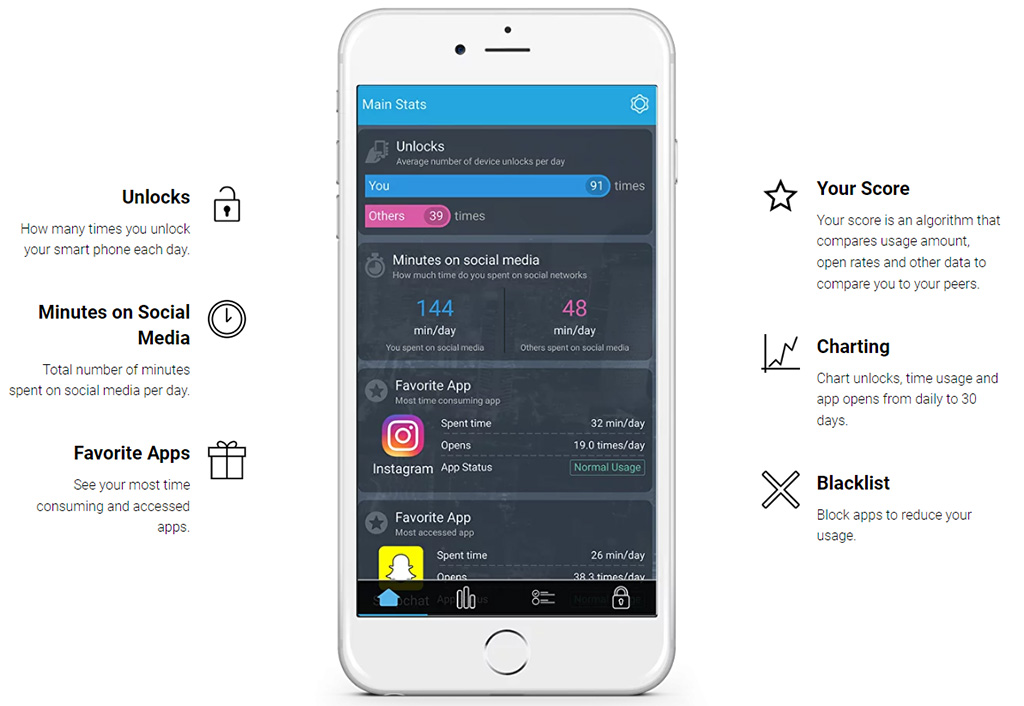
While the global comparison can motivate some users to reduce their screen time, it could have the opposite effect on others, making them feel self-conscious or discouraged about their device usage. This could create unnecessary stress or anxiety for some teens.
Sample user review:
"Simple, efficient, antagonistic. It really does help with phone addiction. I just wish you could activate two blocking modes at once. like a daily limit & a timer at the same time. other than that, I think it's the best phone restriction app out there."
Cost: Free
Best for: Teens who are motivated by competition
Clearspace helps users understand their digital consumption patterns with a simple interface. It visualizes screen time data and breaks it down by app, allowing users to easily identify their digital consumption patterns. Additionally, Clearspace offers focus sessions — periods where users can dedicate time to specific tasks like homework or reading, and the app will block out any apps that might cause distractions.
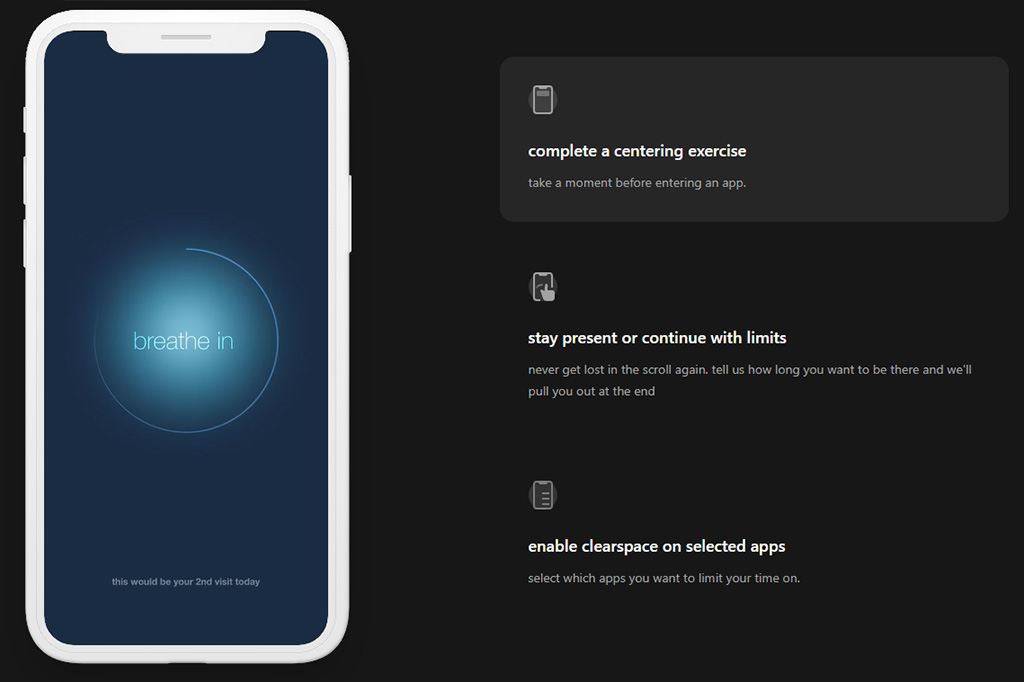
While very effective in its data visualization and focus sessions, Clearspace could be seen as overly restrictive by some users. The app is strict about blocking apps during focus sessions, which could feel limiting to those who are not used to having such boundaries on their device usage. (At the same time, it can be illuminating to find out just how often you’re compelled to check your phone when you’re supposed to be doing chores around the house.)
Sample user review:
"This app has a super simple concept but it has made all the difference in the world. It was super annoying at first to be blocked even when I tried to ignore it, but now my first inclination isn’t to go on social media as soon as I open my phone. It’s also a way more affordable option than other apps."
Cost: $6.99/month or $44.99/year
Best for: Teens who are interested in visualizing how much time they spend on certain apps and want support blocking distractions during focus sessions
Unpluq works a bit differently than other screen time apps. This is a physical product paired with an app. Using the Unpluq App, you can block the apps of your choice on the schedule you want (or on multiple schedules). To access apps when they're blocked, you must go through an app barrier, like the Unpluq Tag, which is wireless and can be stored on your keychain. To use the Unpluq Tag to unblock apps, you simply hold it to the back of the phone.
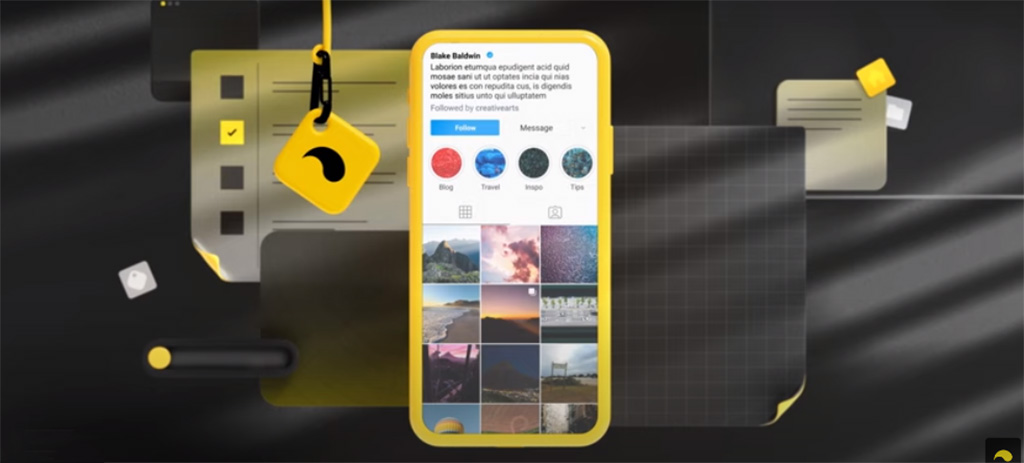
There are additional “distraction barriers” you can use to unlock a specific app. For example, you have to tap a random pattern of buttons, or walk a certain number of steps.
The pro: the extra step involved of pairing the tag with the app can really help teens stick to their screen limits, especially if they keep it on a keychain that's stored in another room when they're at home. The con: the tag itself is not cheap, although the app with the distraction barriers is free and very useful on its own. But if your teen needs a concrete reminder to step away from the screen, the tag might be the ticket.
Sample user review:
"I've tested an uncountable number of these distraction blocking apps/methods and this app has been the best for me. It has all the features I want, great barriers, and usually just works. The team is super communicative as well and has helped me resolve issues quickly. On average, I save about 3-4 hours a day using this, so definitely worth the premium cost for me."
Cost: free for the app, $59.95/year for the Tag (can also purchase for just 6 months at $44.95)
Best for: Teens who need the extra obstacles to make it even more difficult to check their phone one. more. time.
Maintaining an open dialogue about screen time with your teens is key. It’s crucial to acknowledge that no app is a one-size-fits-all solution. Some teens may not have the level of self-discipline required to manage their screen time on their own, and parental intervention could still be necessary. However, for those teens craving more responsibility, these apps can be an effective tool. It's worth exploring these options as a powerful step toward developing healthy digital habits.

The U.S. Surgeon General Vivek H. Murthy issued a new Advisory and 19-page report expressing alarm about the impact of social media on adolescents’ mental health and calling out the need for more research in this area.
A Surgeon General's Advisory is a public announcement that draws the attention of the American public to a pressing public health concern and offers guidance on how to tackle it. Such advisories are issued only for substantial public health issues that demand the country's immediate consciousness and action.
This Advisory highlights increasing worries about the impact of social media on the mental health of young people. It outlines the present evidence concerning the beneficial and detrimental effects of social media on children and teenagers, the main areas of concern for mental health and well-being, and the need for further research to fully comprehend the extent and magnitude of social media's influence.
Up to 95% of youth ages 13–17 report using a social media platform, with more than a third saying they use social media “almost constantly.” Although age 13 is commonly the required minimum age used by social media platforms in the U.S. nearly 40% of children ages 8–12 use social media.
The Surgeon General’s report highlights some of the research that’s been done so far, such as a 2019 study conducted among 14-year-olds that found that greater social media use predicted worse sleep, online harassment, poor body image, low self-esteem, and more symptoms of depression — especially among girls.
Recently, the results of a global study found a correlation between the age someone receives a smartphone or tablet and their mental health as an adult; the earlier a child starts using a device, the more mental health issues they report as an adult.
Brain development is a critical factor to consider when assessing the risk for harm. Adolescents, ages 10 to 19, are undergoing a highly sensitive period of brain development. This is a period when risk-taking behaviors reach their peak, when well-being experiences the greatest fluctuations, and when mental health challenges such as depression typically emerge.
Scientists and psychologists have found some positive benefits to social media use for adolescents, particularly for members of marginalized groups. It can help kids feel more accepted, provide avenues for self-expression, and help them stay connected with friends. But a long-term study of U.S. teenagers aged 12-15 found that those who used social media for more than 3 hours a day were twice as likely to have problems with their mental health, including feeling depressed and anxious. This is concerning in light of the fact that preteens and teens are spending hours every day on social media — an average of 3.5 hours per day for 8th and 10th graders, according to a 2021 study.
Existing research has been mostly correlational and focused on adults. There's an urgent need for more research on social media and youth mental health to fill knowledge gaps.
Key questions that still need to be explored include:
Nearly 70% of parents say parenting is now more difficult than it was 20 years ago, with technology and
social media as the top two cited reasons. But there are early indications that limiting how much time children and young adults spend on social media can help improve their mental health.
In a small study with college students, researchers found that if students used social media for only 30 minutes a day for three weeks, they felt less depressed. This was especially true for those who were very depressed to start with; they reported feeling 35% better after limiting social media. In another study, young adults and adults who stopped using a social media platform for four weeks felt happier, more satisfied with life, and less depressed and anxious. It’s not hard to imagine that we might see an even more dramatic improvement for kids.
In addition to limiting the time kids spend on social media, the Surgeon General’s report included these suggestions for parents:
Discuss with children the benefits and risks of social media as well as the importance of respecting privacy and protecting personal information in age-appropriate ways. Have conversations with children about who they are connecting with, their privacy settings, their online experiences, and how they are spending their time online. Empower and encourage them to seek help should they need it.
We need to give kids and their families the knowledge and tools to safely use the internet, but this responsibility should be shared. Tech companies can do things to make their platforms safer for kids and teenagers. Researchers can work on studies to help create more safety measures. Local, state, and federal governments can also make rules to protect our kids and teenagers.
In the past, the U.S. has taken action to keep kids safe. This has happened with things like toys, transportation, and medicine. The U.S. often uses a "safety-first" approach. This means that something has to be proven safe before it can be used. If it's not proven safe, steps are taken to keep people from getting hurt.
This same approach should be used for the internet and social media. Because there's growing proof that social media can harm some kids and teenagers, we should use a "safety-first" approach when it comes to social media. This means making sure it's safe before letting kids and teenagers use it.

The ride-sharing company announced a new feature this week that allows families to link multiple accounts together in a centralized account. In select cities across the United States and Canada, the Family profile will also allow parents to invite their teens (ages 13–17) to create their own account, so they can request their own rides and order their own meals.
Teen accounts will launch in over a dozen U.S. cities today, including:
Teen accounts incorporate various safety measures that Uber has developed over the past five years. For instance, only highly rated, experienced drivers will be allowed to accept ride requests from teens. Parents will also have the ability to track their child's trip progress in real time and receive information about the driver. They can contact the driver during the trip, reach out to Uber’s support team, and report any issues on behalf of their teen.
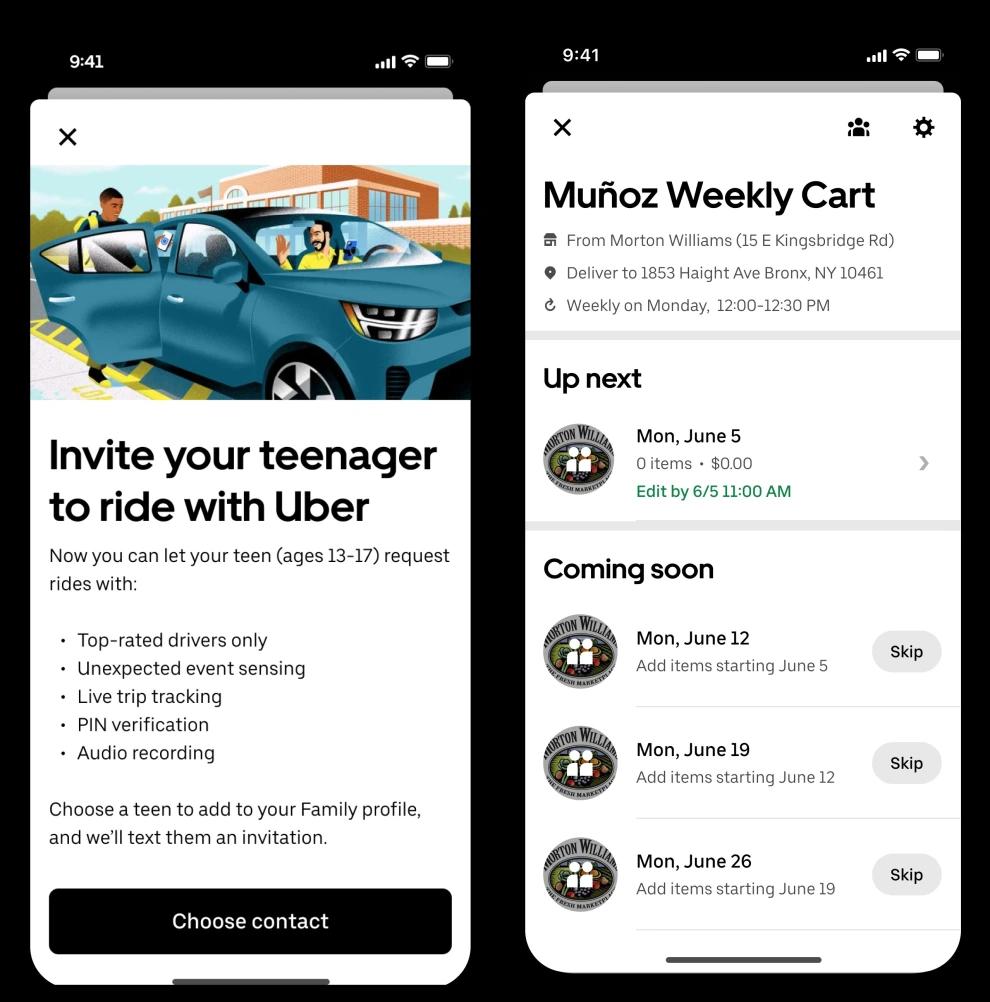
This feature will also be extended to Uber Eats, enabling teens to order food directly while allowing parents to monitor their children's food delivery orders — so you no longer have to go back and forth with your kids over what condiments they want on their burgers.
This could be a good way to help your teenager to develop a skill they’ll need to have as an adult: ordering a ride-share service. And it’s a helpful option to have in case your kid is ever in a jam and needs a ride (or a meal) ASAP.
But like all technology advancements, whether this makes sense for your family to use depends on the age and maturity of your teenager, where you live, your schedule, and your finances. If you decide to move ahead with a teen account, you’ll likely want to do a test ride or two with your teen first and establish some guidelines before giving them the go-ahead to start using this.
These guidelines should include agreement on when and how often it’s acceptable for your child to call for a ride, what communication you require before and after the trip, and how they get approval before ordering a meal with your payment information.

Many parents are concerned about the amount of time their preteen kids spend watching YouTube videos. It’s great for keeping your kid occupied with an activity they love, but spending hours watching online videos often has a negative impact on their attitude afterwards. That's why it's worth finding ways to limit YouTube content that work for your family.
After all, excessive YouTube time may even lead to disinterest in doing anything else — such as homework, socializing with other kids, or playing outside. The American Academy of Pediatrics recommend that families create a screen time plan that works best for them, considering their children's screen usage and their family's unique needs.
While completely banning preteen kids from watching YouTube works for some families, there are also creative ways to allow some usage without letting it consume too much of their day.
Establishing a daily time limit for your child's YouTube use can help prevent excessive screen time. By setting a specific amount of time, such as 30 minutes or an hour, you can help your child develop a better understanding of time management and encourage them to make more conscious decisions about what they watch. It can help to provide visual timers so your kid is aware of the time remaining.
You can limit the type of content your child can access and set restrictions on the amount of time they can spend watching videos. YouTube and various devices — like your iPad and Kindle Fire — offer built-in parental control features that allow you to filter out inappropriate content and set daily screen time limits.
You can use an app like BrightCanary to keep an eye on the content of the videos they’re watching on YouTube, and get alerts when they search for something that may be concerning.
This app is specifically designed for children, featuring curated content that is suitable for younger audiences. With YouTube Kids, parents can create customized profiles for their children, set content preferences, and apply restrictions on search and video playback. For example, you can specify that your kids can only watch content from YouTube accounts that you’ve approved, so they don’t get recommended videos that lead them down rabbit holes you’d rather they not explore.
You can also use BrightCanary to monitor YouTube Kids, in addition to the full video platform.
One way to ensure that your child's YouTube time is both limited and valuable is to allow your child only to watch YouTube videos with you. This not only allows you to monitor their viewing habits but also presents an opportunity for bonding and discussion. By watching YouTube with your child, you can share your thoughts on the content, offer guidance, and help them develop critical thinking skills.
Limit your preteen's YouTube viewing to videos that explain how to do something or teach a new skill. This can include cooking tutorials, DIY projects, or other educational content that aligns with their interests. By promoting learning-focused videos, you help your child make better use of their screen time and support their interest in new topics and hobbies.
Allow your child to watch YouTube only after they've completed their homework and chores for the day. This strategy turns YouTube time into a reward, teaching your preteen the importance of responsibility and time management. It also ensures that they prioritize their daily tasks before diving into the world of online videos.
Instead of allowing your child to watch YouTube on a personal device, like a tablet or phone, consider using a shared device like Apple TV in the living room. This not only promotes better viewing habits but also encourages family interaction and discourages isolating behaviors. Plus, having a shared viewing space can make it easier for parents to monitor content and time spent watching YouTube.
By only allowing your preteen to watch YouTube later in the day, you can ensure that it doesn't interfere with morning and afternoon activities. This schedule can help your child focus on schoolwork, extracurricular activities, or family time during the earlier hours, making their YouTube time a relaxing way to unwind after a productive day.
Heads up, parents: to encourage healthy sleep habits, make sure your child shuts off YouTube at least an hour before bed. Try these screen-free activities before bedtime instead.
A “digital detox” refers to taking a break from screens and social media. A week or two break from screens can help your preteen develop healthier habits and discover new hobbies or interests. During this time, encourage activities like reading, outdoor play, or family game nights to help your child find alternative ways to spend their free time.
Managing your child’s YouTube time doesn't have to mean banning it entirely. It’s especially important to establish good digital habits now, before their viewing consumption increases as a teenager. By implementing creative strategies, you can ensure that your child enjoys the benefits of online video content, without compromising their overall well-being.

The BrightCanary Breakdown series distills research about kids, the internet, and social media into essential takeaways.
The American Psychological Association (APA) issued a new health advisory in April 2023 around adolescents and social media use, with 10 recommendations for parents.
“Using social media is not inherently beneficial or harmful to young people … [but] potential risks are likely to be greater in early adolescence — a period of greater biological, social, and psychological transitions, than in late adolescence and early adulthood.”
Here are their specific recommendations, based on the scientific evidence to date:
There are more and more studies released every month about the impact of social media on children and young adults, often leading to alarming headlines. But these reports can be confusing, and there are still challenges to overcome in the research: It's difficult to prove causation because the data we need is often hard to get, buried within tech companies’ proprietary information.
We don't yet have much information about how social media affects kids over many years and into adulthood. Additionally, there isn’t enough research on how social media affects kids from different backgrounds or racial or ethnic groups, or those with special needs or health conditions.
The APA is hoping to cut through the clutter and establish some best practices based on what we do know so far.
There are several actions you can take to help your kids establish and maintain healthy digital habits:
While it is true that much more research needs to be done around how social media impacts adolescents, the APA’s recommendations make sense given what we already know: kids need boundaries and limits on social media consumption, and parents have an important role to play in this.
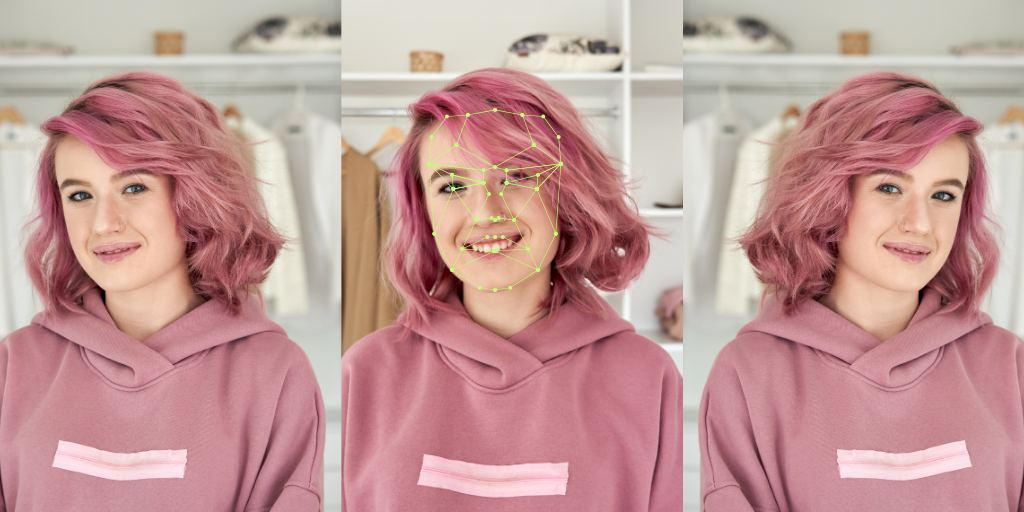
You may have seen the deepfake videos showing popular celebrities doing and saying things they've never done. What is a deepfake? These are fake videos created using artificial intelligence. These videos can be harmless fun, but they can also spread misinformation or be used maliciously. With kids and teens spending hours watching videos on platforms like YouTube and TikTok, it's essential to teach them about deepfakes and how to detect them.
Deepfakes are videos created using AI algorithms to make it appear as if someone is doing or saying something they didn't. They can involve celebrities, politicians, or even regular people.
Kids might come across deepfakes involving their favorite YouTubers, TikTok stars, or animated characters. Most of the time they're harmless and entertaining, but sometimes they're created to spread misinformation or cause harm. It's important for you and your kids to learn how to spot these types of videos, and understand what to do when you encounter them.
There are several telltale signs of a deepfake you can tell your kids to look out for:
There will be times, however, when it's simply too challenging for kids to determine whether a video is a deepfake, especially as technology continues to improve.
In such situations, it's essential for kids to trust their instincts. If something feels off or too good to be true, it's worth asking questions and investigating further. If the video involves someone they know in an embarrassing or compromising situation, they should give that person the benefit of the doubt and assume it's a deepfake. Encourage them to ask you or another trusted adult for help if they're unsure whether a video is real or fake.
It's important to help kids understand why some people create videos that put people and characters in false or misleading situations:
When kids encounter deepfakes online, it's essential to teach them how to respond appropriately:
Deepfakes can be created to shame or bully people, and it's important for kids and teens to understand this dark side of the technology. By manipulating photos or videos, bad actors can make it look like someone is involved in embarrassing situations or activities they never took part in. These fake videos can seriously hurt a person's reputation, cause emotional pain, and make it difficult for them to feel safe online.
It's crucial for young people to learn about this issue, practice empathy, and treat others with respect, both online and offline, to help create a safer and more supportive digital environment for everyone.
As kids and teens share pictures and videos of themselves on social media, it's crucial to explain that these images could potentially be used to create deepfake videos. While it's unlikely for most people, it's essential to be aware of the risk and take steps to protect their digital identities.
Be cautious with sharing: Encourage kids and teens to think twice before sharing photos or videos of themselves, especially in public forums. Remind them that once something is posted online, it can be challenging to control who sees it or how it's used — and the greater the volume of images shared publicly, the more material the deepfake creator has to work with.
Adjust privacy settings: Teach them how to adjust privacy settings on their social media accounts to limit who can view their content. Encourage them to share only with friends and family, rather than publicly.
If your child discovers a deepfake video featuring their image, it's essential to address the issue calmly and take the following steps:
When discussing deepfakes with older teens, it's essential to address the issue of sexualized deepfakes. A study in 2019 found that 96% of deepfakes were pornographic, with nearly all of them targeting women. These deeply invasive and harmful deepfakes can have severe emotional and psychological consequences for victims.
If your teen or someone they know becomes a victim of a computer-generated pornography, offer guidance on how to respond:
As parents, it's our responsibility to teach our children how to navigate the digital world safely. By explaining what deepfakes are, how to spot them, and how to respond, we can empower our kids to think critically, make informed decisions about the content they consume, and understand how to respond to online harassment if they are the victim of a deepfake. Encourage open communication with your children about their online experiences, and help them develop a critical eye toward the media they encounter.

You’re annoyed. As a parent, you've made the decision not to allow your child to have their own social media account on TikTok, only to find out that they've been watching TikTok videos on a friend's phone. It can be frustrating to feel like your child is circumventing the rules you've put in place to protect them.
But disobedience aside, you might be wondering whether it's okay to let your child look at TikTok when they’re hanging out with friends. Are there benefits to allowing this? What are the downsides?
TikTok is a social media platform where users can create, share, and discover short videos. Many teenagers are drawn to TikTok for its entertaining content and the opportunity to express themselves creatively. But, like other social media platforms, TikTok has its share of potential dangers and concerns, including exposure to inappropriate content, cyberbullying, privacy issues, and more.
When your child has their own account on TikTok — or any other social network — the various risks and negative impacts they’re exposed to include:
You can offset some of these risks by monitoring your child’s account and enforcing screen time limits, but this will require engagement from you on an ongoing basis. Apps like BrightCanary send you alerts when your child sees concerning content, which cuts down on your need to review every post and video — but it’s a good idea to still have regular social media check-ins with your child.
If your child occasionally watches TikTok videos on a friend's phone instead, some of the risks and negative impacts may be reduced:
But the tradeoff is you won’t have any visibility into what they’re watching or doing, and that limits your ability to provide input and guidance.
Letting your child watch TikTok videos occasionally on a friend’s device minimizes some of the downsides of social media. But your child may still be exposed to inappropriate content on their friend’s phone, and you’ll have less visibility into what they’re seeing and doing.
So, should you allow your child to watch TikTok videos on a friend’s phone? The following factors can help you make an informed decision that prioritizes your child's safety and well-being while still respecting their desire to engage with their peers in the digital world.
If you believe they are mature enough to handle the content and potential risks associated with occasional TikTok viewing, you may feel more comfortable allowing them to watch videos on a friend's phone.
If you trust your child’s friend and believe they have a positive influence on your child, you may feel more comfortable knowing that the content will be filtered or curated by someone who shares your values.
Your level of involvement in your child's digital life plays a significant role in this decision. Regularly discussing social media use, monitoring their online activities, and establishing open communication can help ensure that your child is engaging safely and responsibly, even if they only use TikTok occasionally. You’ll also want to consider how involved your friend’s parents are: do their parents periodically check-in while their kids are using social media, or do they have more of a hands-off approach?
Consider what alternative activities your child can engage in, both online and offline. Encouraging your child to participate in hobbies, extracurricular activities, and spending quality time with friends and family can help minimize the appeal of social media platforms like TikTok.
Establishing trust with your child is essential when it comes to their social media use. If you can trust your child to follow the boundaries you've set regarding occasional TikTok viewing, it may be worth considering allowing them to watch videos on a friend's phone.
It’s essential to have ongoing conversations with your child about the potential risks and negative impacts of social media. If your child understands the reasons behind your decision and can acknowledge the potential dangers, they may be more equipped to handle occasional exposure to platforms like TikTok.
By carefully considering these factors and weighing the potential risks and benefits, you can make a more informed decision about whether to allow your child to watch TikTok videos on a friend's phone occasionally.
This is a tricky decision for parents because your child may very well use a friend’s phone behind your back, especially if they’re away from home. However, by explaining why those rules matter, you can help your child understand why it’s important to minimize social media use.
Ultimately, your decision should prioritize your child's safety and well-being while respecting their desire to engage with their peers in a digital world.
Allowing your child to occasionally watch TikTok videos on a friend's phone, instead of having their own account, can help reduce the negative impacts associated with daily social media use — while still allowing your kid to feel looped into what their friends are watching and discussing. This compromise may work better for both you and your child, especially since it will be difficult to prevent them from doing it anyway.
On the other hand, you won’t have any visibility into what they’re seeing and doing if it’s not on a social media account you monitor. So, it’s important to talk to your child about the risks of platforms like TikTok. That way, they can make more informed decisions when they’re away from home. Either way, by setting clear boundaries and expectations, fostering open communication, and emphasizing the importance of offline connections, you can help your child navigate the world of social media safely and responsibly.

With over 445 million users each month worldwide, Pinterest has become a popular platform for people of all ages to share and discover ideas. This includes millions of preteen and teen girls who enjoy using Pinterest for inspiration, from fashion and DIY projects to room decor and study tips.
But parents need to be aware of Pinterest’s dark side. A recent investigation revealed that some adult men are using Pinterest to curate boards and sexualize pins featuring underage girls.
Pinterest is a website where you can save and share pictures of things you like. You can make boards with different themes, like recipes, fashion, or travel. Pinterest does not allow pictures of naked people or sexual subjects, and you’re required to be at least 13 years old to create an account — which hasn't stopped many tweens from signing up anyway.
But an NBC News investigation discovered that adult men are skirting these rules by using Pinterest to make boards with pictures of young girls and teenagers. They find these pictures by using Pinterest’s suggestions, which are based on what people search for and what they like. Sometimes, they leave sexual comments about the girls.
Historically, Pinterest hasn’t had a good way to stop these people or to report them. You could only report one picture at a time, not a whole board, and you couldn’t report pictures of minors.
In response to the alarming findings, Pinterest has taken several measures to safeguard its younger users. One significant update is making Pinterest accounts under the age of 16 private by default. This means that boards and pins for users under 16 are not visible or accessible to anyone but the user themselves.
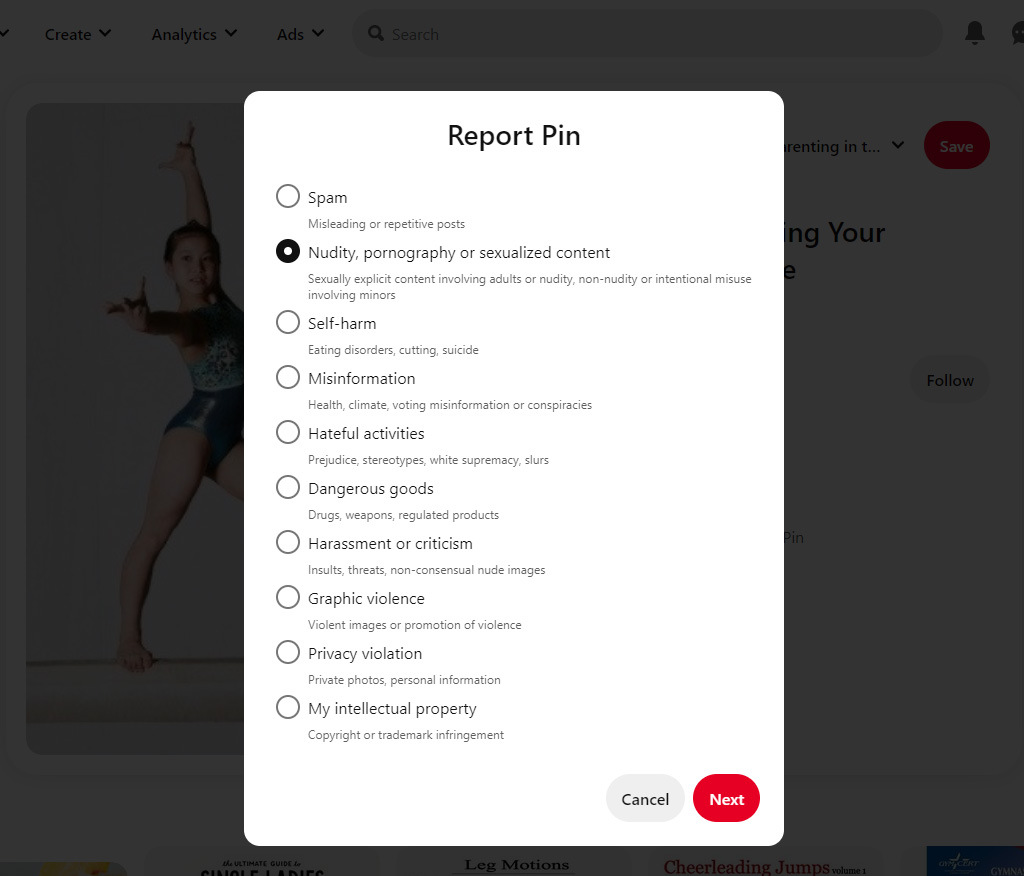
Pinterest has also introduced a way to report a pin for including “nudity, non-nudity or intentional misuse involving minors.” And you now have the ability to report an entire board, not just the individual pins.
Pinterest also says it will use more artificial intelligence (AI) to find and automatically block people who use the platform inappropriately. It will also ask people to verify their age when they sign up.
Additionally, Pinterest will soon reintroduce the ability for teens to share their inspiration with the people they know, but only if they grant permission for those individuals to view their content.
You can stay up to date on Pinterest’s plans in their teen safety hub. These changes are aimed at limiting the exposure of underage users to potential predators and providing a safer environment for teenagers to explore their interests and passions.
While Pinterest is working to improve its platform's safety, it's essential for parents to take an active role in supervising their teen's online activities. Here are some ways you can help protect your teen on Pinterest:
Communicate: Talk to your kid about the potential dangers they may encounter online, including on Pinterest. Encourage open communication and make sure they understand the importance of being cautious when sharing personal information, pictures, or engaging with strangers on the platform.
Monitor their Pinterest activity: Keep an eye on your teen's boards and pins to ensure they are not sharing inappropriate content or engaging with suspicious users. You can also follow their account to receive updates on their activity. With BrightCanary installed, you can even monitor what your child types and searches for on Pinterest.
Use parental control features: Pinterest allows parents to require a passcode for their teen to change certain account settings. This added security measure can help you maintain control over your child's privacy and safety settings.
Teach them about privacy settings: Familiarize yourself and your teen with Pinterest's privacy settings. Make sure your child's account is set to private and that they understand how to adjust their settings to control who can view their content.
Encourage safe sharing: Remind your child that they should only share their content with people they know and trust. They should be cautious about granting access to their boards and pins to unfamiliar individuals.
Report inappropriate content and users: If you or your child come across inappropriate content or suspicious users on Pinterest, report them immediately. This can help protect not only your child, but also other users on the platform.
Stay informed: Stay updated on the latest developments in online safety and privacy. As technology and social media platforms continue to evolve, it's crucial to be aware of new risks and measures that can help protect your child.
Pinterest can be an inspiring and enjoyable platform for tweens and tweens to explore their interests and passions, but parents need to stay involved to ensure their safety. By utilizing available tools and fostering open communication with your child, you can help protect them from potential predators while they continue to enjoy the benefits of Pinterest.

As parents, we want the best for our children, and seeing them struggle with stress and anxiety can be incredibly difficult. Unfortunately, social media use, screen time addiction, and FOMO (fear of missing out) are all common contributors to these issues, especially in the tween age group. Here’s how you can help your child cope.
Stress is a natural response to a perceived threat, whether that threat is real or imagined. Anxiety, on the other hand, is a feeling of unease or worry about what might happen in the future. Both stress and anxiety are normal, but when they become overwhelming or interfere with daily life, they can become problematic.
Social media use and screen time addiction can exacerbate stress and anxiety in a number of ways. For example, constant exposure to social media can create a feeling of FOMO, where kids feel like they are missing out on peer bonding and group experiences if they are not constantly checking their feeds.
This feeling is particularly problematic for teenagers who struggle with the ability to develop and sustain meaningful relationships with others. According to a 2018 report by Common Sense Media, approximately 70% of teenagers with low social-emotional well-being say that they sometimes feel left out or excluded when using social media.
In addition, social media can contribute to a sense of comparison and competition, where tweens are constantly comparing themselves to others and feeling like they are not measuring up. This can lead to feelings of inadequacy and self-doubt, which can contribute to stress and anxiety.
Finally, excessive screen time can exacerbate suicidal behavior and disrupt sleep patterns, which is stressful on the body. When tweens do not get enough sleep, they may feel irritable, anxious, or overwhelmed, which can make it difficult to manage big emotions.
As a parent, it can be difficult to know how to help your tween manage stress and anxiety exacerbated by social media use and excessive screen time. However, there are a number of practical strategies and techniques you can use to support your child at home.
Social media is not inherently bad and can actually provide many benefits, such as staying connected with friends and family or accessing educational resources. Instead of demonizing social media, it’s important to foster a positive relationship with it. Encourage your child to use social media in a responsible and healthy way, such as setting boundaries on screen time, following kid-friendly accounts, and taking breaks from social media when necessary.
While there are many benefits to the internet, there are also risks, such as exposure to inappropriate content, cyberbullying, and online predators. By staying engaged and monitoring your child's online activity, you can help protect them from these risks and ensure that they are engaging with the internet in a safe and responsible way. In addition, staying engaged with your child's online activity can help you better understand their interests and concerns, and it can provide opportunities for open and honest communication about difficult topics.
As a parent, you can lead by example when it comes to technology. This means setting boundaries on your own screen time, engaging in outdoor activities, practicing mindfulness techniques, and talking about your own feelings in a positive way. By modeling healthy behaviors, you can show your child that managing their emotions is a priority, and that it is possible to live a balanced and fulfilling life without relying on screens.
Encouraging your child to spend time outside can be a great way to reduce stress and anxiety. Outdoor activities, such as hiking, biking, or playing in the park, can provide a sense of calm and relaxation. Heading outside can also help your child disconnect from the pressures of social media and screen time.
Mindfulness techniques, such as deep breathing or meditation, can be a powerful tool when tweens feel stressed out or anxious. Encourage your child to take a few deep breaths when they are feeling overwhelmed, or teach them a simple meditation technique, such as focusing on their breath or repeating a calming phrase.
The 5-4-3-2-1 ground method is a popular option: ask your child to sit quietly and look at five things they can see, four things they can feel, three things they can hear, two things they can smell, and one thing they can taste. This method is a helpful (and easy-to-remember) way to encourage kids to focus on the present, rather than external stressors outside of their control.
One of the most important things you can do to support your child is to talk to them about their feelings. Encourage your child to share their worries and concerns, and let them know that it is okay to feel stressed or anxious. Listen to them without judgment, and offer reassurance and support.
If your child's stress responses are interfering with their daily life, it may be necessary to seek professional help. A therapist or counselor can provide support and guidance for managing your child’s emotional triggers, and they can help your child develop coping skills and strategies for dealing with difficult emotions.
Stress and anxiety can be difficult challenges to navigate, especially for tweens who find themselves spending too much time behind screens. But by practicing healthy behaviors, such as limiting screen time, teaching mindfulness techniques, and seeking professional help if necessary, parents can provide effective support for their tweens. Remember, managing stress and anxiety is an ongoing process, and it is important to be patient, understanding, and supportive as your child navigates these challenges.