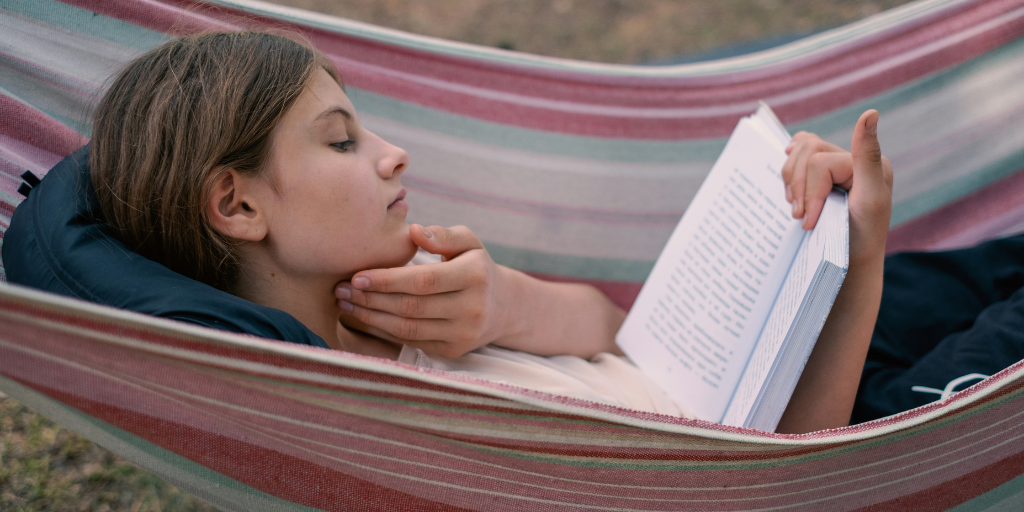
Reading skills among US students are at the lowest levels ever measured, with one in three American kids unable to read at a basic level. It’s not just their skills that are declining; it’s also their interest. The percentage of children who read for pleasure has dropped precipitously in recent decades. Given the numerous benefits of reading for kids, from cognitive to emotional to academic, this is a serious cause for alarm.
The benefits of reading for kids are strongly supported by science. Here’s what the research says:
Reading cultivates the imagination, which in turn fosters creativity and innovation. That’s especially important given that experts predict creativity will become increasingly valuable with the rise of AI.
There’s a strong relationship between reading and empathy because it exposes kids to new ideas, beliefs, and viewpoints.
Kids who read in their free time report feeling more confident than those who don’t.
Children build most of their vocabulary outside of a school setting, and reading for fun is one of the most effective mechanisms.
Reading for pleasure aids in healthy brain development, in part by literally changing its structure. This contributes to greater development of cognitive and executive functioning skills such as:
Reading for pleasure at a young age is associated with less mental health issues and greater well-being.
Reading at a young age is correlated with greater development in areas of the brain related to attention.
Although the number of kids who read for fun has decreased across all age groups in recent decades, the decline is most dramatic among teenagers. That’s also the age when many kids access social media for the first time — which is hardly a coincidence.
Here’s how screen time decreases reading for kids:
The more time students spend using devices for English and language arts schoolwork, the lower their reading proficiency scores.
In the U.S., children aged 8-18 spend an average of 7.5 hours per day on a screen. That doesn’t leave much time for reading.
More screen time is correlated with difficulty concentrating, a key skill needed for reading longer texts.
Here are six tips for how to get your kids to read more:
Start with what your child is already drawn to. From space to animals to hockey, if your kid is into it, there’s probably a book to match. It can even complement their screen habits; you’d be amazed how many books based on video games exist. They're not always the best literature, but it’s a great entry point for reluctant readers.
Use a parental monitoring tool like BrightCanary to see how much time your child spends on screen-based activities versus things like reading. Use this information to help them balance devices with more time for books.
Make reading easy with these tricks:
They may not look like they’re watching or act like they care, but letting your kid see you reading is one of the best ways to get them into the habit themselves.
Read aloud to your kid, even when they’re old enough to read independently. Reading next to your child is also a great habit. In my house, we like to do “snuggle reads,” where we all pile onto the couch and pick up a book.
I’m going to say it louder for the people in the back: Graphic novels are real books. I get so irked when a parent or teacher forbids graphic novels. The same goes for audiobooks and for books that you think are just plain not any good. With reading levels declining like they are, we should embrace any avenue that gets kids reading.
If you let your child read for pleasure without judgment, chances are, they’ll find their way to other books you deem more “worthy.” And if not? So what? At least they’re reading!
Kids’ skills and interest have both declined considerably in recent years, with excessive screen time playing a major role in the change. It’s an alarming trend because the benefits of reading for kids are numerous. Finding books that interest them, making reading accessible, and limiting screen time are all ways to get kids to read more.
Want more insight into your child’s interests? Parents love BrightCanary’s activity summaries because they show you what your child cares about, from books to movies. Download BrightCanary and get started today.