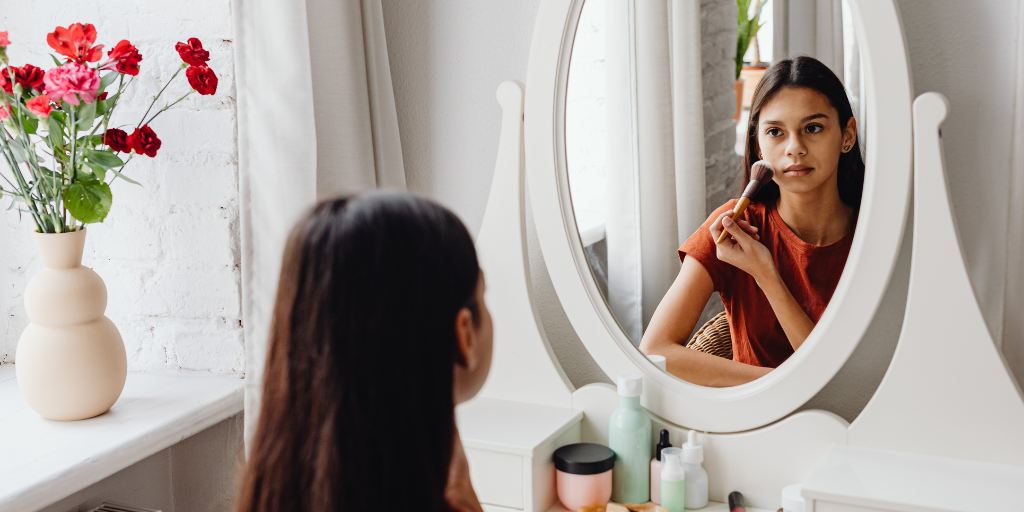
Tween girls obsessing about their looks and flocking to popular beauty products isn’t new (remember Lip Smackers?). But the rise of social media influencers has pushed this tendency to new and alarming extremes.
Tweens are gravitating toward products that are often unsafe for their young skin and developing unhealthy relationships between their physical appearance and self-esteem.
Here’s what parents need to know about so-called “Sephora kids,” including the role social media plays, the potential risks to kids, and what to do if you’re worried about your tween’s skin care routine.
What are Sephora kids?
“Sephora kids” refers to tweens, often girls between 9 and 13, who are fixated on luxury skincare and beauty products promoted by influencers.
The term originated from reports of children shopping at high-end beauty retailers like Sephora, but it’s not used more broadly to describe the intense attachment that many preteen kids have to expensive beauty and skin care products intended for adults.
How has social media fuels the tween skincare obsession
Social media platforms like TikTok, YouTube, and Instagram have turned skincare routines into a cultural phenomenon, and tweens are watching closely. Here’s what parents need to know about the role social media plays in tween girls’ skincare obsession:
Aspirational content: Products hyped on social media can quickly become status symbols. This drives kids to want to purchase products so they can show off to friends.
Brand-specific. Drunk Elephant, Sol de Janeiro, Bubble Skin Care, and Glow Recipe are some of the brands most coveted by Gen Alpha.
Influencers their own age: Some point to Kim Kardashian’s daughter, North West, as the original Sephora kid. At 9 years old, she started posting videos of her skincare routine on TikTok, causing her follower count to explode.
FOMO is a big part of it. Trends have a way of snowballing quickly in the social media era. When tweens see their friends post about a product, they’re afraid of being the odd one out.
Bullying is sometimes involved. Parents and tweens report that some kids are bullied for not having the “right” products.
It distorts their perception. Many beauty influencers use filters to enhance their appearance. Consistently viewing these altered images can alter kids’ expectations of what normal skin looks like.
Many of the products popular with teens contain active ingredients, such as retinol and exfoliating acids, that are designed for aging skin and can be dangerous when used on kids.
Dermatologists warn that misusing and overusing products can lead to:
Irritation or redness
Rashes or burns
Contact allergies
Dryness and skin burns
Acne flare-ups
Skin infections
Hormonal changes, in combination with layering of multiple multiple products on the face, can exacerbate the harm.
2. Mental health risks
The Sephora kid trend also affects emotional and psychological development.
Identity issues happening in the preteen years can be made worse by absorbing beauty content that isn’t age-appropriate.
Studies identify harmful, racialized language in many videos, such as routines that emphasize “lighter, brighter skin.”
Watching their peers online devote so much time, attention, and money to their skin sets impossibly high standards for tweens. When they feel like they can’t fit into these expectations, it can lead to anxiety, depression, and low self-esteem.
What to do if you’re worried about your Sephora kid
Do you have a Sephora kid? Here’s how to support their physical and mental health:
Talk to your child about what’s age-appropriate. Help your child understand that experimenting with makeup and learning about skin care and hygiene are normal, healthy parts of adolescence, but a hyper-focus on appearance and a preoccupation with wrinkles and aging can be harmful.
Don’t be afraid to say “no.” Social media puts a tremendous amount of pressure on kids, who in turn pressure their parents to let them buy expensive and inappropriate products. Remember that you’re the parent, and it’s your right and responsibility to say no sometimes. It may be hard, but it’s ultimately good for your child to hear.
Emphasize other virtues. Seek to be a counterbalance to content that puts a high value on physical appearance. Make a point to consistently praise your child for things like their kindness, intelligence, and humor instead.
Monitor their social media use. BrightCanary is an AI-powered monitoring app to help parents monitor their child’s online activity. The Interests summary on the dashboard tells you if they’ve been spending a lot of time focusing on cosmetics and their appearance, and YouTube monitoring shows you if they’re watching a lot of makeup and skincare tutorials.
The real story behind “Sephora kids”
The social-media-fueled rise of the Sephora kid trend has, in many cases, caused tweens' focus on skin care and beauty to cross over from normal to problematic. Parents need to be aware of the potential physical and mental health risks to kids from a preoccupation with their appearance and educate their child on what content is appropriate for their age.
BrightCanary helps you monitor your child’s online activity so you can spot problems faster, including an unhealthy consumption of beauty content. Download the app and get started today.
Be the most informed parent in the room. Sign up for digital parenting updates.
We've earned the APA Labs Digital Badge
BrightCanary is honored to earn this designation from the American Psychological Association (APA). This APA Labs Digital Badge reflects alignment with APA Labs criteria for scientific principles, safety, ethical use, and usability. It is not an endorsement nor guarantee of effectiveness. APA Labs does not independently test products.
Excellence in online safety
The Mom’s Choice Awards evaluates products and services created for children, families, and educators. The program is globally recognized for establishing the benchmark of excellence in family-friendly media, products and services. BrightCanary was recognized for our excellence in family-friendly online safety.