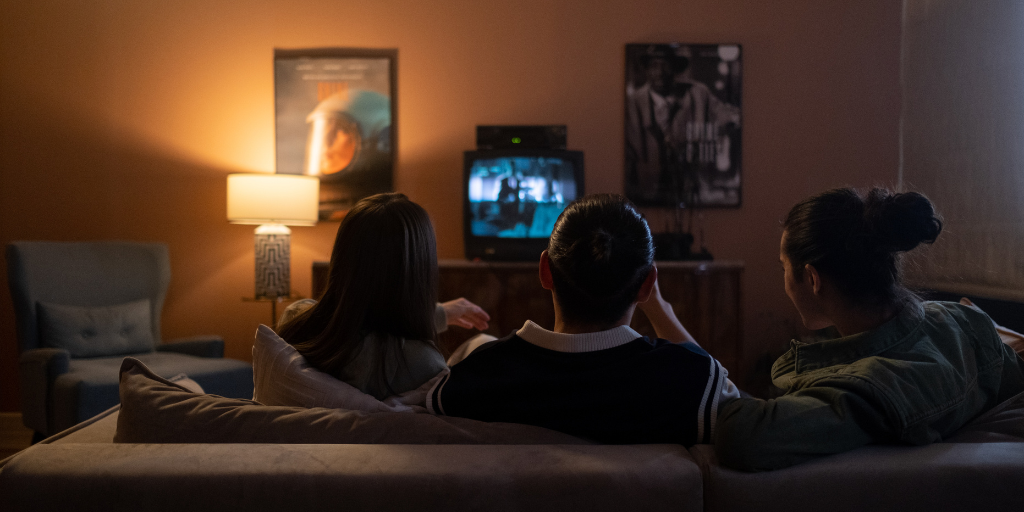
Picture this: It’s winter break, you pop some popcorn and cue up a favorite movie from your childhood to share with your child. Everything goes well at first; your kid loves it, you’re deep in the nostalgia feels … until that scene comes on. The racist joke, casual misogyny, or harmful stereotype that you totally forgot about and that definitely does not pass the 2025 sniff test.
Your first instinct is to dive for the remote and declare movie night over. Not so fast. A few problematic scenes don’t have to mean a movie is off-limits — it can actually lead to meaningful conversation and teachable moments where you can acknowledge a film’s flaws while still enjoying it for what it is.
In this guide, we’ll cover how to decide whether a flawed movie is still worth watching, how to talk to kids about outdated or offensive content, and how to turn those moments into lessons that align with your family’s values.
Why movies that didn’t age well don’t need to be “canceled”
When considering if a movie is okay to show your child, consider these points:
Does it have isolated issues, or is it fundamentally built on harmful premises? If the overall takeaway is problematic, it might be best kept on the shelf. But if the underlying premise and message are positive, it’s probably still worth watching.
Consider historical context. It’s not enough to shrug and say, “it was the 90s,” but it is important to consider the era when a movie was made and what was considered permissible at the time. Helping your children understand the context (we didn’t know better back then) without excusing the harm (but we do know better now) teaches them valuable lessons about society’s capacity for change.
Are you prepared for difficult discussions? Before you hit play, make sure you’re mentally prepared to answer tough questions from your kiddo.
Teachable moments: What kids can learn from movies with problematic content
These are some of the valuable lessons your child can learn from thoughtful conversations about problematic content.
Capacity for growth. Seeing what was once considered acceptable in movies will help your child understand how social values shift and why continual progress toward greater awareness and inclusion is important.
Empathy. Discussing how stereotypes in media harm real people and communities will help your child develop empathy for experiences that are different from their own.
Media literacy skills. Your child will learn how to watch movies critically, rather than passively consuming content. This important skill transfers to analyzing the news, social media, and advertising.
Open dialogue. Showing your child that you’re open to talking about difficult subjects teaches them that they can come to you about upsetting, confusing, or troubling content they view elsewhere.
Tips for parents: How to view problematic content with your child
Here are my top tips for how to talk to your kids about problematic content:
Review first. Refreshing your memory on a movie helps you be prepared for the ensuing conversations. Rewatch it before viewing with your child or rely on trustworthy sources like Common Sense Media.
Prep your child. Give your kiddo a heads-up that there are some things in the movie that aren’t okay by today’s standards and that you’ll talk about it when it comes up.
Pause and discuss. The key to turning troubling scenes into teachable moments is to take the time to acknowledge and discuss the issues. Keep the remote handy and ready to hit pause.
Let your child lead. Start by asking your kid what they noticed. You might be surprised by their insight.
Keep it brief. Don’t belabor the discussion; otherwise, your child may never let you pick the movie again!
7 movies that didn’t age well
If you grew up watching these films, keep in mind that they contain content that may feel jarring or harmful by today’s standards. That doesn’t always mean they’re off-limits — but it does mean they’re worth previewing and discussing.
Sixteen Candles (1984): Contains racist stereotypes and jokes about sexual consent that don’t hold up today.
Revenge of the Nerds (1984): Includes scenes that normalize sexual assault and misogyny, often played for laughs.
Ace Ventura: Pet Detective (1994): Features over-the-top transphobic humor that can be confusing or hurtful.
Indiana Jones and the Temple of Doom (1984): Relies heavily on racial stereotypes and caricatures of non-Western cultures.
Grease (1978): Romanticizes unhealthy relationship dynamics and problematic gender norms.
Breakfast at Tiffany’s (1961): Mickey Rooney's portrayal of Mr. Yunioshi is a wildly offensive caricature.
Gone With the Wind (1939): A testament to its time, the film has been critiqued for glossing over the harsh realities of slavery and romanticizing the Confederacy.
This isn’t an exhaustive list, and kids don’t all experience these movies the same way. What matters most is context: your child’s age, maturity, and your willingness to pause, explain, and listen.
Talking points
I’m of the mind that with thoughtfulness and a little finesse, it’s possible to explain anything to kids of all ages. Here are some talking points to get you started:
“Did you notice anything about that scene?”
“Wow. That made me uncomfortable. How did you feel watching it?”
If the problematic scene involves an element that doesn’t apply to your child personally: “How do you think that makes [people depicted in the scene: women, minorities, LGBTQ folks, disabled people, etc.] feel?”
If the scene involves something that does apply to your child: “That was hard to watch. Are you open to talking about how it made you feel?”
“When this was made, many people didn't realize this was hurtful. Now that society knows better, we can do better.”
“That doesn’t match our family’s values. We believe it’s important to treat people with kindness, respect, and inclusion.”
“Historically, white, cisgender, heterosexual men have been in charge of making the majority of movies. How do you think that impacted what used to be acceptable in movies? Does it still impact what’s considered acceptable now?”
The bottom line
Just because a favorite movie from your childhood includes content that is problematic by today’s standards doesn’t mean you can’t share it with your kid. With thoughtful discussion, troubling content can be transformed into teachable moments. Make sure you’re ready for tough questions before you hit play and let your child lead the discussion when appropriate.
It’s a good idea to keep an eye on what your tweens and teens watch on their own, too. BrightCanary helps supervise your child’s online activity, offering AI-powered alerts for inappropriate content on Apple devices, YouTube, Google, and social media. Download today to get started.