
Welcome to Parent Pixels, a parenting newsletter filled with practical advice, news, and resources to support you and your kids in the digital age. This week:
⚖️ After two major jury verdicts against Meta, what happens next? In a landmark ruling, Meta, the parent company of Instagram and Facebook, and YouTube were ordered to pay $3 million in damages to a woman who said their platforms were designed to addict her and caused negative impacts to her mental health. The decision comes right after a New Mexico jury ruled that Meta violated state law by not protecting kids from sexual predators.
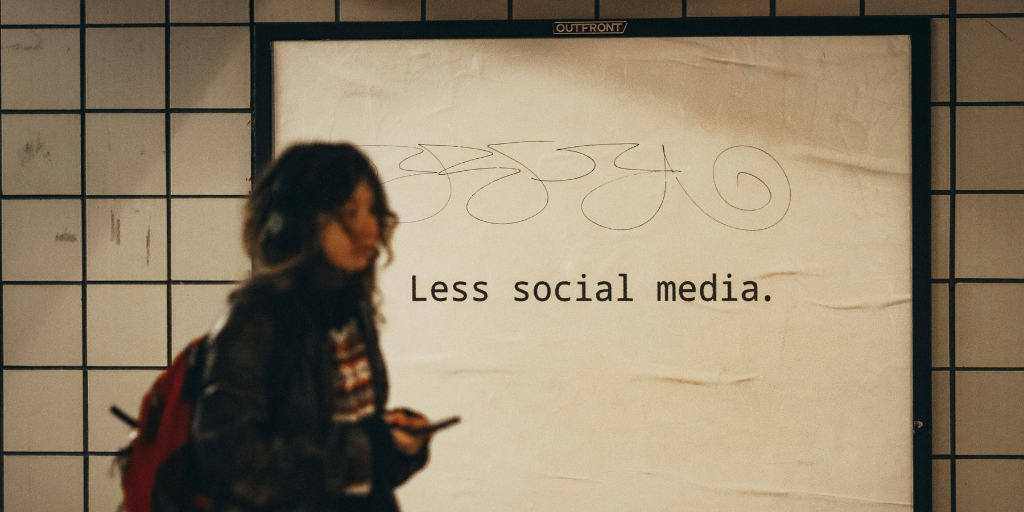
Parents and Meta’s crisis PR team alike are concerned, albeit for different reasons (Meta plans to appeal both verdicts). What does this mean for parents, many of whom have kids that are already on social media? The verdicts give parents a nonconfrontational opening to revisit how their family uses social media — not as a punishment, but as a reasonable response to new information. It’s more evidence that we need to be more mindful about how we scroll.
A recent study published in the Journal of Research on Adolescence followed 102 parents of adolescents (ages 12–15) and found that nearly two-thirds used at least four of five core parenting strategies to actively manage social media use: communication, limit-setting, co-use, technical monitoring, and “nontechnical monitoring” (being generally aware and present). Nearly every parent had at least one conversation with their teen about social media during the study period. The parents who reported the most success shared some common habits:
Parents in the study were candid about what makes this challenging: kids find workarounds, different households have different rules, and conversations become harder as kids get older. But staying involved, in whatever capacity works for you, is better than nothing at all.
Here’s how BrightCanary can help without turning it into a daily battle over your child’s phone.
📺 AI slop is flooding YouTube Kids and making millions: More than 200 child advocacy groups and experts — including Jonathan Haidt, author of The Anxious Generation — have signed an open letter demanding that YouTube take out the AI-generated slop flooding YouTube Kids. AI slop refers to mass-produced, AI-generated videos that are often bizarre, nonsensical, and designed to grab and hold viewers’ attention.
The letter’s authors say YouTube is not only failing to stop AI slop from reaching children but is also actively profiting from it. Advocacy group Fairplay found that the top AI slop channels targeting children have earned over $4.25 million in annual revenue. A YouTube spokesperson responded that the platform has “high standards” for YouTube Kids content and that parents have the option to block individual channels. The practical takeaway here is that YouTube Kids is not a safe platform for kids to use without supervision. Despite those “high standards,” AI-generated content that’s engineered to maximize watch time — rather than to educate, entertain, or spark imagination — is worth limiting.
BrightCanary monitors what your child searches and watches on YouTube, including YouTube Kids, so you have visibility into what they’re actually spending their time watching. For more tips, learn how to set parental controls on YouTube.
🤖 What teens are actually doing with AI chatbots: Kashmir Hill of the New York Times spent time with teens who use social AI chatbots — apps like Character.ai and PolyBuzz that let users chat with AI-generated characters. The picture that emerged is more nuanced than either “teens are being corrupted by AI” or “it’s just entertainment.” Kids described using chatbots to process feelings they didn’t know how to articulate to a real person, to talk about social scenarios like breakups, or simply to fill the loneliness gap.
Teens used words like “play” to describe their interactions, treating more like a creative exercise than personal connection. It’s also a little bit absurd: one popular chatbot is a sentient piece of cheese with dreams of world domination, and it has been chatted with over five million times.
However, as information science professor Yang Wang put it, “I would caution parents. We found that if kids are addicted to interacting with these bots, the potential negative impact can be dire.” If chatbot interaction becomes a substitute for real-world connection, the skills that require actual human interaction stop developing. And then there’s the concern about how safe these chatbots are for younger users: several teens mentioned feeling frustrated when their chatbots became flirty or sexual, even when they weren’t initially seeking those interactions.
The capacity for a chatbot to help a kid articulate feelings or work through something uncomfortable has real value, but this is still a developing space that requires careful attention to who is constructing the chatbot and what protections they have for younger users. As with most things in digital parenting, the big questions are: how much, how often, and whether your kid knows they can come to you with what they’re actually experiencing online.
Want a free guide on this topic? Download our AI safety toolkit.
Parent Pixels is a biweekly newsletter filled with practical advice, news, and resources to support you and your kids in the digital age. Want this newsletter delivered to your inbox a day early? Subscribe here.
Given this week’s stories, it’s a good time to check in on how your teen feels about their own social media use — not what you think about it, but what they think. A few questions to try:
🐦 We revamped our FAQ, and we’re kinda obsessed with it. Everything you wanted to know about BrightCanary, organized by category, with a full troubleshooting guide for common issues. If you’ve ever had a question about how the app works, this is a good place to start.
📚 The best way to destroy your child’s love of reading: If you want your child to benefit from being a bookworm, this piece from ScreenStrong lays out what you shouldn’t do: make reading feel like a chore, never read yourself, show no interest in what they’re reading, skip the library, and more.
🌕 To the moon: The Artemis II crew is en route to the moon and back, and the images they’ve sent home — including never-before-seen views of the lunar surface and stunning photos of Earth — are genuinely breathtaking. It’s a good reminder that the internet can still occasionally produce something worth stopping for.