
Welcome to Parent Pixels, a parenting newsletter filled with practical advice, news, and resources to support you and your kids in the digital age. This week:
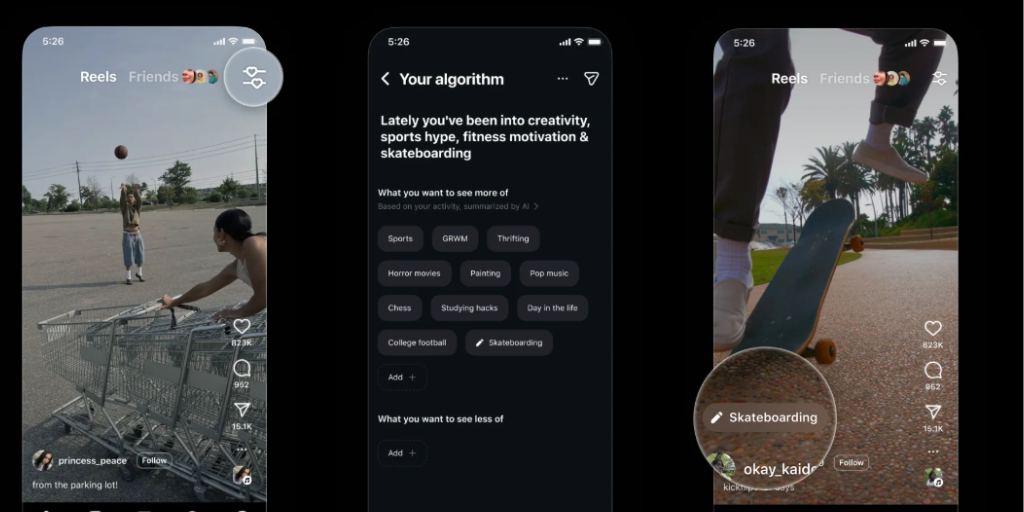
👉 Instagram will let your child pick what shows up in Reels: Instagram is doing something pretty unusual for a social media platform: explaining what’s under the hood. With a new feature called “Your Algorithm,” users can now see a summary of their recent interests and choose topics they want to see more or less of, like dialing up “jiu jitsu” and dialing down “AI cat videos.”
For parents, this product update is also a conversation-starter with your teen. Social media algorithms aren’t neutral. They learn from behavior, reward attention, and quietly shape what kids see day after day. This feature offers a rare moment to pause and scroll and ask:
Why do you think Instagram thinks this is your interest?
How do videos like this make you feel after watching them for a while?
What would you want to see more of (or less of) if you had the choice?
Our take: Tools like this don’t “fix” social media, but they do help kids understand that feeds are designed to hook you based on your interests. The more teens understand how algorithms work, the better equipped they are to use platforms intentionally instead of getting pulled along for the ride. For more on this, browse our parent’s guide to social media algorithms, and learn how to reset your child’s algorithm on popular platforms.
🎁 Thinking about a smartphone for the holidays? Read this first: If a phone is on your child’s holiday wishlist, new research suggests it’s worth waiting. A large study published in Pediatrics found that kids who got their first smartphone before age 13 had significantly worse health outcomes than peers without phones:
Additionally, a new study from the American Psychological Association now directly ties short form video content with significantly diminished mental health and poor attention spans.
The median age for getting a phone in the U.S. is now 11, which means many kids are entering middle school with a powerful device and very few guardrails. However, the takeaway from experts isn’t panic: it’s constraints. Use parental controls like Apple Screen Time to set restrictions on device use, and use a monitoring app like BrightCanary to stay informed about what your child encounters online.
One simple, high-impact step? Keep phones out of bedrooms overnight. It’s not a cure-all, but it’s one of the easiest ways to protect sleep and manage device boundaries, even if your child already has a phone.
Parent Pixels is a biweekly newsletter filled with practical advice, news, and resources to support you and your kids in the digital age. Want this newsletter delivered to your inbox a day early? Subscribe here.
A few questions to help kids think critically about feeds, phones, and habits:
📰 We were included in Wirecutter’s roundup of best parental control apps! Check us out under "Other parental control apps worth considering."
🚫 “It was kind of scary, because social media is so present in my life, and to think it could be taken away like that so suddenly felt weird.” Australia’s social media ban kicked in last week, effectively banning teens under age 16 from using Instagram, YouTube, TikTok, and other major platforms. Here’s how teens are responding.
🤖 Researchers warn that popular AI tools are offering dieting advice, tips for hiding disordered eating, and even generating hyper-personalized “thinspiration” images. Experts say this content can be especially dangerous for vulnerable teens — and much harder to spot than traditional social media posts.