Welcome to Parent Pixels, a parenting newsletter filled with practical advice, news, and resources to support you and your kids in the digital age. This week:
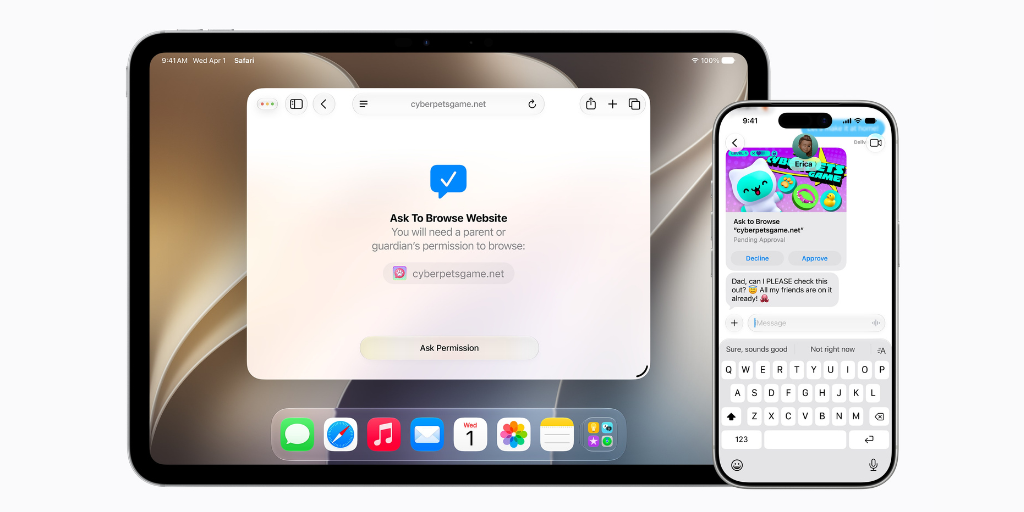
🍎 Apple previews new child safety features: Apple announced a slew of child safety updates coming this fall. Here’s what’s new with Child Accounts:
Our take: These are welcome improvements, but they’re largely an upgrade to existing tools. Notably absent is a way for parents to be alerted when something concerning comes up in their child’s activity — which is still the gap BrightCanary was built to fill. Learn more about BrightCanary’s real-time content alerts.
🇬🇧 The UK just told Apple and Google to block nude images on kids' devices: The UK government has asked tech companies, including Apple and Google, to block access to sexually explicit images on smartphones and devices for under-18s — and they have three months to comply. Prime Minister Keir Starmer has told companies to either activate built-in features or update their software, and Technology Secretary Liz Kendall said: “Companies should switch these protections on by default, for every child, on every device. We are giving them three months to show us that they will do the right thing."
The move has drawn some criticism because it requires companies to also verify the age of users, which raises privacy concerns. There is a precedent for it, though: Apple recently began asking UK iPhone users to verify their age to make sure only adults access apps and sites for people intended for users over 18. Do you think tech companies should automatically block explicit content on kids’ devices?
The UK has also announced a full social media ban for all users under 16, following in the steps of Australia, the first country to ban kids from platforms like Snapchat and TikTok. We’ll dig into this ban, and the implications, in our next issue.
🤖 New data: 86% of kids are using AI: A new report from Common Sense Media finds that most kids (ages 9–17) are now using AI, and they’re using it for more than just homework help. A significant majority (86%) of kids have used or interacted with AI, most commonly for “entertainment or just for fun” (89%) followed by “help with schoolwork or homework” (85%).
But here’s where it gets interesting: 57% of AI users are using it to get information or advice about their health or bodies. Among AI users:
The data on lonely kids is especially striking. Among kids who report feeling lonely at least some of the time, 54% use AI daily, 46% use it to practice social skills, and 45% use it to discuss their feelings and personal problems — significantly higher rates than their non-lonely peers. Kids who find it hard to make friends are also more than twice as likely to say AI understands them better than most people.
AI companionship isn't fringe behavior. It's already widespread, and it's filling an emotional gap for a meaningful number of kids. Not sure how to start a conversation about AI with your child? Our free conversation guide has a starter for exactly this.
Parent Pixels is a biweekly newsletter filled with practical advice, news, and resources to support you and your kids in the digital age. Want this newsletter delivered to your inbox a day early? Subscribe here.
Here are a few topics to bring up around the dinner table this week:
📹 YouTube now has DMs. YouTube just launched in-app direct messaging, which means your child can now send and receive private messages without leaving the app. If your child uses YouTube, it's worth knowing this exists — and having a conversation about it.
👨👩👧 Did you know you can share BrightCanary with your co-parent for free? If your partner isn't set up on BrightCanary yet, open the app, go to the bottom menu and tap “Add a Parent.”
📱 We're on Instagram! If you're not already following us, we share digital parenting tips, conversation starters, and news you can actually use. Follow us @bright_canary.