
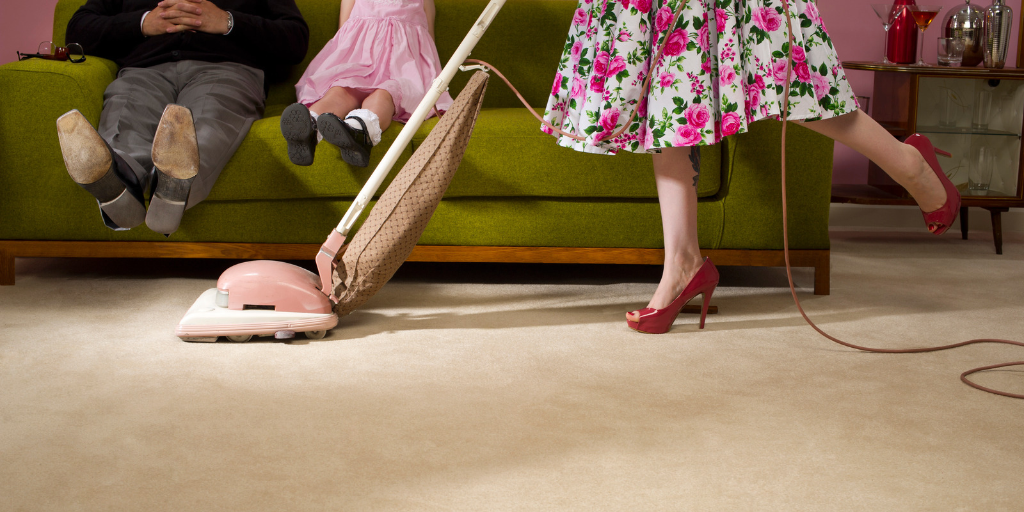
On the heels of the smash-hit novel Yesteryear by Caro Claire Burke and the buzz surrounding the upcoming film adaptation starring Anne Hathaway, the tradwife movement is having a reckoning.
Despite how soothing it might be to watch someone milk a cow and grind their own wheat to make grilled cheese from scratch (yes, this is a real example), there’s more to the movement than sourdough starters and cottagecore couture.
#Tradwife is filling teens’ social media feeds with rigid gender roles, racism, and extreme ideologies. It’s even been called the female manosphere.
Tradwife (a portmanteau of “traditional” and “wife”) is an online subculture promoting traditional gender roles for women, such as being a stay-at-home mother, bearing lots of children, and submitting to their husband’s authority. The movement is characterized by a clean, retro aesthetic of 1950s-middle-class white domesticity with a heavy splash of rural homesteading.
#Tradwife hit virality in the early 2020s, buoyed by COVID’s forced retreat inside just as the rise of algorithms reshaped social media feeds in a way that favors controversial viewpoints.
Tradwife influencers are predominately young — many are teens themselves — and they’re catching the eye of teen girls online.
I need to pause here to be very clear: deciding to be a stay-at-home mom is a valid choice. It’s also a financial necessity for growing numbers of families. I’m not talking about a mutually agreed-upon domestic balance that leans toward gender norms. I’m talking about an ideology that celebrates male dominance, female submission, and financial dependency. Here are the risks:
Influencers only show what they want us to see. Tradwife content is often a fallacy propped up by smoke and mirrors, generational wealth, and invisible household staff. Most people can’t afford this kind of heavily curated existence.
The trend in the tradwife community is to marry young and reproduce prolifically, often foregoing college and starting a career. Coupled with the submissive dependence the movement encourages, this sets teen girls up to struggle to support themselves should the marriage go sour.
A portion of tradwife influencers promote taking away a woman's right to vote in favor of a single household vote cast by her husband.
One prominent tradwife issued a “white-baby challenge,” and even tradwives who don’t openly identify with racist ideas often use hashtags such as #14words and #1488 to signal their allegiance to white supremacy.
A cornerstone of tradwife culture is the return to “traditional values” of domesticity for women and moral authority for men. The picture of femininity they promote is narrow and rigid, with a woman’s place in the home, submitting to her husband, and bearing flocks of children.
There’s a significant overlap between the tradwife movement and alt-right ideologies.
Use digital check-ins and a monitoring app like BrightCanary to supervise your child’s online activity and see if they engage with tradwife content. Keep an eye out for these associated hashtags:
If your teen’s algorithm is filled with tradwife content, resetting their algorithm can help balance things out.
Balance rigid gender narratives they may see online by exposing them to a wide range of ideas on what it means to be a woman.
Tradwife culture promotes traditional, often rigid gender roles such as “a woman's place is in the home” and “a wife should submit to her husband’s authority.” The movement also has significant overlap with racist, sexist, and alt-right ideas. To protect your teen against the harms of the tradwife movement, monitor their online activity, help them reset their algorithm, and expose them to diverse gender expressions.
 UCLA/National Scientific Council on Adolescence Report on How to Improve Social Media for Tweens
 Study Shows That Majority of Parents Restrict Who Can See Posts About Their Children
 Teens Using Social Media to Self-Diagnose Mental Health Issues
 What Is Sammy’s Law? A Step Toward Safer Social Media for Kids