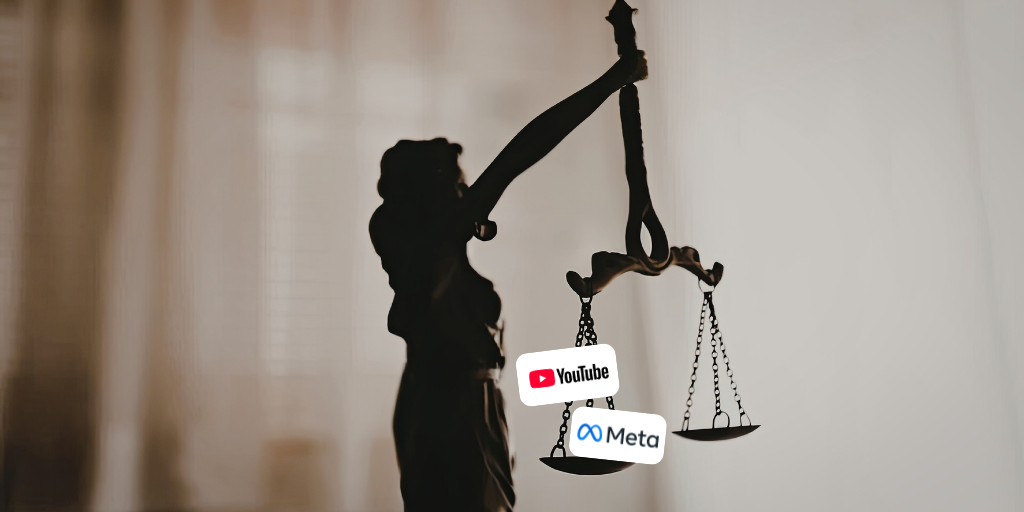
Two juries just told tech companies what parents already knew: social media causes harm to kids, and the “we’re just the platform” defense is not as strong as it once was.
In March, a New Mexico jury found Meta liable over child exploitation risks on its platform and imposed a $375 million penalty. The next day, a Los Angeles jury found Meta and Google liable in a landmark social media addiction trial.
In both cases, it came down to how the platform algorithms push content to children. The argument was not just that harmful things existed on Instagram and YouTube. It was that the companies’ own systems were actively recommending, feeding, and amplifying content to children in ways that made harm more likely.
The content on online platforms is protected under Section 230 of the Communications Decency Act, which shields companies from liability for content posted by users. But these cases asked if online platforms are safe for children to use because of the way they are built and marketed today. These bellwether verdicts say no.
The Los Angeles case questions the idea that tech companies are passive hosts with no responsibility for how their systems shape behavior.
The claim was that the products themselves, including Instagram and YouTube, were designed in ways that made harm more likely for young users. These design features include the things meant to keep kids engaged and scrolling: endless feeds, auto-play loops, and recommendation systems. The jury found that the way the platforms were built and operated could itself be part of the harm.
In the New Mexico case, the plaintiff argued that Meta presented Facebook, Instagram, and WhatsApp as safe for families, while knowing the platforms exposed children to sexual solicitation, exploitation, and serious mental health risks.
The New Mexico attorney general’s office compiled evidence with a good old-fashioned sting operation, in which synthetic decoy child accounts were created. Within hours those accounts were targeted with harmful content and predatory behavior. The state said Meta concealed what it knew, made false or misleading statements about safety, and took unfair advantage of children’s vulnerability and inexperience while continuing to profit from the platforms.
The jury agreed and found Meta liable under New Mexico consumer protection law. They treated it like a classic product safety case: You said the product was safe. You knew serious dangers existed. You did not tell families the full truth.
In both cases, the Section 230 defense failed because the arguments weren’t about hosting harmful content, but rather harmful product design that was actively targeted to children.
Juries agree that concern about social media isn’t just panic. Adults do understand technology. Parents recognize that social media apps expose children to risks they are not prepared to manage on their own. The risks are real.
A child is not sleeping because their phone never turns off.
A teen is pulled into a spiral that harms their body image and self-worth from a stream of videos promoted to them.
Private messages are a place where strangers, scammers, or predators can operate because the platform won't act against them.
The important thing to understand is that these verdicts are the beginning. They are not the last word from the appellate courts. But they are not meaningless, either. They tell parents, lawmakers, and courts that a jury heard the evidence and found the companies responsible.
Stop treating social media as harmless. Stop assuming that because it is popular or recommended on the App Store that it is safe. We have to realize the risks that are built into products designed to capture attention and lower resistance, not only for our kids, but for ourselves.
Start by knowing what apps your child is using. Which ones allow private messages? Is screen time spilling into sleep, secrecy, or distress? Is your child suddenly defensive about certain apps or conversations?
BrightCanary can help. The app has a proven track record with tools to monitor your child’s online activity across every app they use, including texts and direct messages. You’ll get concerning content alerts in real time, plus insights about your child’s digital life and even tips to help you start important conversations. Download today to start your free trial.
These platforms are not risky because bad people use them. They are risky because of how they are built, how they are marketed, and the content they push. Parents already understood that. The law is starting to catch up.