One of the things that makes BrightCanary stand out is the alerts you receive when your child types something concerning. But you might wonder just how those alerts work and how they can benefit your family. To help answer that, I sat down with Steve Dossick, co-founder and CTO of BrightCanary.
What he shared makes it clear: these alerts aren’t just a feature. They’re the heart of how BrightCanary helps parents protect kids in the digital age. Here’s what I discovered from our chat.
Why does BrightCanary send alerts to parents?
When I posed this question to Dossick, himself the parent of teenagers, he brought up Sammy Chapman. At sixteen, Sammy died from an overdose after using Snapchat to buy what turned out to be a fentanyl-laced pill. Dossick told me that stories like Sammy’s make BrightCanary’s alerts so important, and it’s what motivates the team to continuously improve.
“When you ask me what keeps me up at night … if we could help a parent with that … that's the goal,” Dossick said.
How do BrightCanary’s concerning content alerts work?
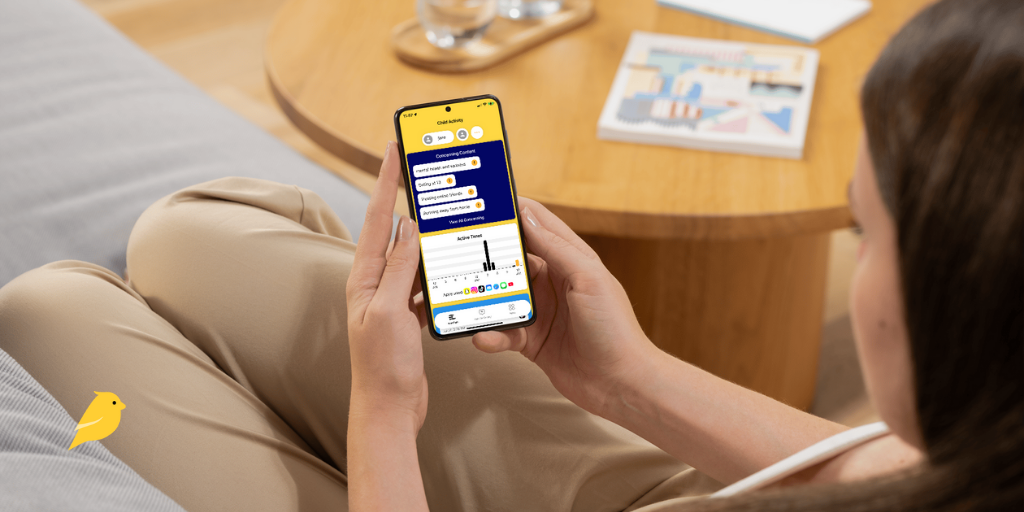
BrightCanary scans everything your child types and sends you real-time alerts about any concerns so you can step in. Here’s what that looks like in practice:
You decide which issues you want more or fewer alerts for.
Coming soon, you’ll be able to enter a text prompt with additional concerns you’d like the system to scan for.
When your child types something concerning, you’ll get an alert along with a summary of the issue.
You can access the full transcript if you need more information.
What are the benefits of AI-powered alerts?
Context, not keywords. According to Dossick, some tools are based solely on keywords — but keywords are susceptible to misspellings and are easily fooled by code words and constantly changing slang. BrightCanary uses a mix of keywords and context, harnessing the power of a custom-trained AI system to read between the lines of what your child types and catch nuances that a keyword-only approach can’t.
Alerts within minutes. Dossick said if Sammy’s parents had received an alert that he was messaging about drugs on Snapchat, he would likely be alive today. Your parent dashboard keeps you broadly informed about what your child is up to online, but if something requires immediate attention, you’ll get an alert within minutes.
Empowerment for kids and parents. Some companies rely on human moderators to decide what parents need to know. At BrightCanary, we believe deciding if your child needs help should be up to you, not an anonymous team of strangers. That’s why we let you customize your alerts and then pass all alerts directly to you.
No doomscrolling your child’s messages. The average kid types thousands of messages a day, most of which are harmless. It would take ages for you to read each one. Dossick says that the concept behind BrightCanary’s alerts is that, rather than doomscrolling everything your child does online, “you can rely on the alerts to be like, ‘hey, there's something important you should pay attention to.’”
Privacy and freedom — with guardrails. Children need privacy and freedom in order to grow into responsible adults. By relying on AI-powered alerts, you can be as hand-on or as hands-off as you want, with the peace of mind that if something serious comes up, you’ll be alerted.
What concerning content does BrightCanary look for?
BrightCanary’s concerning content alerts are split into nine categories:
Nudity and Sexual References
Weapons
Offensive/Hate Signs and Gestures
References to Extremist Ideology
Graphic Violence, Blood, Wounds, and Gore
Profanity
Discriminatory Insults
Alcohol and Drug References
Other Concerning Content
In talking to Dossick, it’s clear that the Other Concerning Content category is where BrightCanary’s robust AI system really shines.
The alerting system is trained on expert parenting advice, guidelines from the American Psychological Association (APA), and the latest slang and internet trends, and it’s able to understand context. So, BrightCanary can spot a wide range of issues that don’t fit neatly into one of the other categories. This includes things like signs of disordered eating or an unhealthy emotional reliance on AI chatbots.
Additionally, BrightCanary’s alerts work for both the images and videos your child sends and receives when you sign up for the Text Message Plus plan.
How does BrightCanary keep up with the latest slang and trends?
Dossick explained that BrightCanary’s AI system relies on several out-of-the-box large language models (LLMs) and then gives them additional custom training. Here’s how that ensures BrightCanary is up on the latest kidspeak:
Frequently updated base models
The LLMs that BrightCanary is built on are trained on internet content and updated every few months.
As changes to slang and trends show up online, they’re reflected in what BrightCanary scans for.
Custom training
BrightCanary also relies on a number of human sources to help stay current on what’s happening in the kid-o-sphere.
That knowledge is fed into our system to ensure it’s always up-to-date.
Final word
BrightCanary harnesses the power of a custom-trained AI system to scan everything your child types and then sends you a real-time alert to any concerns. By using a mix of keywords and context, and frequently updating the system on changing slang and trends, BrightCanary reads between the lines, so you don’t have to read every single message.