Strangers Can Find Your Child Using AI: How to Protect Their Privacy

By Andrea Nelson
July 3, 2026
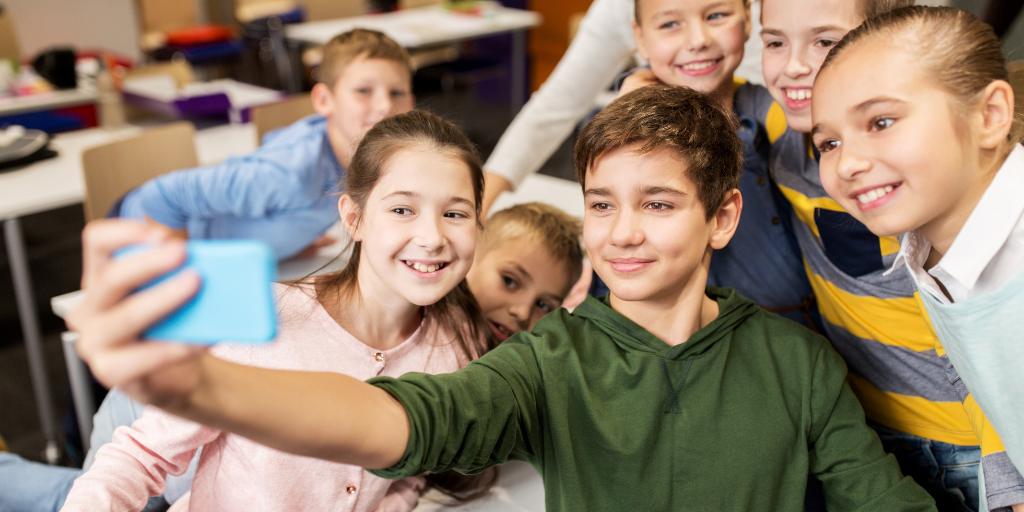
Group of schoolchildren taking selfie

Artificial intelligence (AI) is frighteningly good at determining your child’s location from a photo, even when no location tags are used. And the risk is only going to get worse as AI systems get better. Here’s everything you need to know about how strangers can use AI to find your child and how to reduce the risk. 

How AI can determine your child’s location from a photo

AI systems are shockingly adept at determining a photo’s location by quickly analyzing clues. Every model is slightly different, but here are some things an AI platform might use to determine location: 

  • Embedded metadata 
  • Objects 
  • Text 
  • Architecture 
  • Landmarks 
  • Trees and foliage 
  • Landscape, such as water or mountains
  • Soil
  • Weather
  • Angle of the sun 

These bits of data are processed within seconds, and the more context a user provides to the AI system, such as narrowing it down to a specific region, the more accurate the results. In some cases, exact GPS coordinates can be identified. 

I tested some systems myself and found a mixed bag. Claude and ChatGPT had the hardest time identifying the location of my photos, while Gemini and programs like Picarta, which are designed expressly for this purpose, were alarmingly accurate.  

What your child's photos reveal without you knowing

Strangers might feed photos of your child into AI to determine a variety of things, such as: 

  • Their school
  • The city, neighborhood, or, in some cases, exact address where they live
  • Places they’ve traveled 
  • Where they hang out outside of school 
  • Their workplace 

How to reduce the risk when posting photos

The brutal truth is that there isn’t a lot that can be done to protect against determined and nefarious actors gleaning information from your child’s photos. Here are some steps you can take to mitigate the risks: 

1. Don’t post any photos online

The only truly foolproof method for protecting your child is to not post any pictures of them online and to prevent them from posting any photos, period. I fully realize this is an extreme most people aren’t willing to go to, though. 

2. Remove metadata

Not all AI platforms can read metadata, but the ones that can tend to be accurate down to exact coordinates because that info is usually embedded in the photo. Here’s an explainer of how to remove metadata. It’s a good idea to do this not only before you post online, but also when sending photos to other people. 

3. Crop or obscure identifiable details 

Before posting, crop out or put a sticker over any details that might be used to identify a location. For example: 

  • Addresses
  • Street signs
  • Business names or logos 
  • Landmarks
  • Notable landforms or bodies of water
  • Buses 
  • License plates 
  • School or work uniforms 
  • Sports team logos 

How to talk to your child about photo privacy

Kids aren’t generally known for their logical calculation of risk, so they’re likely to need some coaching in this area. Here’s how to talk to your child about photo privacy online: 

  • Explain the risks. Let them know that ill-intentioned strangers could use their photos to identify their location.
  • Start early. My six-year-old isn’t ready for a conversation about AI geo-location, but I do ask her permission before I share photos, even over text. I do this to help her recognize that pausing and critically thinking before posting should be a habit and to give her a sense of ownership over her likeness. 
  • Model critical thinking. Occasionally verbalize your thought process as you decide whether to post a photo and if there are any elements you need to obscure. 
  • Provide safer avenues for sharing. The desire to connect by posting photos isn’t harmful in and of itself. Rather than posting photos on their main feed that could compromise their privacy, encourage them to use safer routes, such as: only sharing to close friends groups on social media, text threads with small groups of friends or family, or private social media accounts (not public).
  • Stay involved. Keep an eye on what they post online and coach them if anything needs adjusting. BrightCanary can help your monitoring efforts by supervising what they post across social media, texts, and every app they use. 

The bottom line

AI can determine your child's location from photos by analyzing landmarks, architecture, metadata, and other visual clues. Sometimes, it can even pinpoint exact GPS coordinates. The safest option is to not post any photos of your child and to prevent them from posting pictures. Other efforts to reduce risk include removing metadata and cropping out or obscuring identifying details. 

Talk to your child early about these risks, model thoughtful decision-making before sharing photos, and steer them toward private sharing options like close-friends groups or small text threads.

For added peace of mind, join the thousands of parents who trust BrightCanary child monitoring. The app will alert you if it flags anything concerning, and with robust text message monitoring, you’ll be able to see what photos they send to and receive from friends and peers.


Instagram logo iconFacebook logo icontiktok logo iconYouTube logo iconLinkedIn logo icon
Be the most informed parent in the room.
Sign up for digital parenting updates.
APA Labs Digital Badge
We've earned the APA Labs Digital Badge
BrightCanary is honored to earn this designation from the American Psychological Association (APA). This APA Labs Digital Badge reflects alignment with APA Labs criteria for scientific principles, safety, ethical use, and usability. It is not an endorsement nor guarantee of effectiveness. APA Labs does not independently test products.
Mom's Choice Awards Honoring Excellence
Excellence in online safety
The Mom’s Choice Awards evaluates products and services created for children, families, and educators. The program is globally recognized for establishing the benchmark of excellence in family-friendly media, products and services. BrightCanary was recognized for our excellence in family-friendly online safety.
@2026 Tacita, Inc. All Rights Reserved.